

Speed skating ice is known for its extreme coldness and hardness, requiring precision from Olympic athletes. Historically, speed skaters have never competed for Olympic gold on temporary indoor rinks, but that will change at the 2026 Milan-Cortina Winter Games.
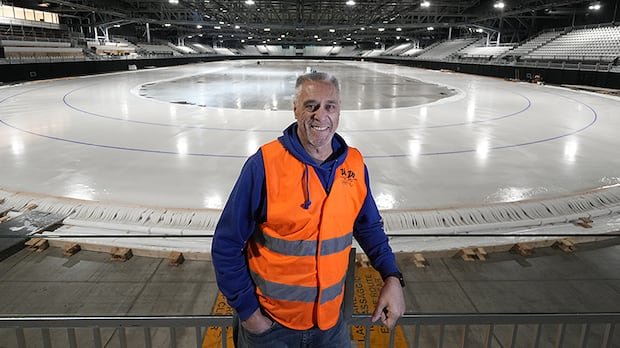
To ensure optimal glide and minimal friction, Olympic officials enlisted the expertise of ice master Mark Messer. With a wealth of experience from six previous Olympic speed skating tracks and his role as the ice technician at the renowned Olympic Oval in Calgary, Messer is no stranger to creating top-notch ice surfaces that have seen over 300 records broken.
Since late October, Messer has been meticulously building the speed skating ice at the new Speed Skating Stadium in Rho, just north of Milan. Describing the endeavor as one of his greatest challenges, Messer emphasized the importance of achieving the perfect conditions for speed skating ice.
Comparing different types of ice, Messer highlighted that speed skating ice must be hard, cold, and immaculately smooth to allow skaters to maintain their speed. Any impurities or imperfections can hinder the skaters’ performance by causing friction and slowing them down.
Enrico Fabris, a former Olympic gold medalist turned deputy sports manager at the speed skating venue in Rho, stressed the significance of consistent and fast ice for all skaters. He noted that skating on ideal ice conditions enhances the overall experience for athletes.
Ice science
Messer, who first worked at the 1988 Calgary Olympics, highlighted the advantages of indoor speed skating tracks in providing controlled conditions without weather interference. Transitioning to the challenge of building a temporary rink for the Olympics marks a new milestone in Messer’s career.
Prior to Messer’s involvement, extensive preparations were made to create the ice surface in Italy. Insulation, piping systems, and glycol refrigeration were meticulously set up to achieve the ideal ice temperature. Water, with the right balance of impurities, was applied in multiple layers and meticulously maintained to ensure a flawless skating surface.
One of the crucial aspects of ice maintenance is to prevent any contaminants that could affect skaters’ performance. The Zamboni ice resurfacer plays a vital role in keeping the ice clean and ensuring a smooth surface for the skaters.
Testing the ice during a junior World Cup event provided valuable insights for fine-tuning the ice conditions. Adjustments to air and ice temperatures are being made to optimize speed and safety for the upcoming Olympic events.
Final adjustments
With the upcoming training sessions for Olympians, the focus is on perfecting the ice conditions to provide a level playing field for all skaters. Balancing air temperature, humidity, and ice quality remains a meticulous process, especially with a large audience expected during the events. The ultimate test will come when the Olympians hit the ice for their initial training on Jan. 31.
Messer emphasized the importance of the final stages of preparation, where ensuring consistent and optimal ice conditions for all skaters is paramount to the success of the speed skating events.
Tag: rewrite-pending