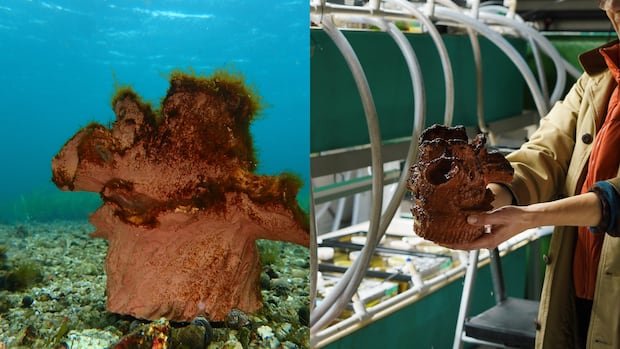


A student at Dalhousie University is combining their love for conservation and art to assist in the recovery of native kelp populations. In Nova Scotia, warmer ocean temperatures have significantly reduced the kelp population, impacting its role as a food source and habitat for marine life.
Kit Tymoshuk created clay pots designed to nurture baby kelp by providing a stable growing environment. These pots offer an innovative approach to kelp restoration, inspired by the traditional green gravel technique. Tymoshuk obtained a $5,000 grant from Ocean Wise to bring their idea to life and gathered wild clay from various locations during the summer for the pots’ construction.
Preferring locally sourced materials, Tymoshuk collected over five kilograms of wild clay, refining it to ensure quality. After testing the clay to confirm its suitability for the project, a blend of wild clay from Stewiacke and Annapolis Royal, along with commercial clay, was chosen. The design of the pots focused on combining functionality with aesthetic appeal, drawing inspiration from natural elements like corals and barnacles.
Utilizing their backyard pottery wheel, Tymoshuk crafted the pots, while their friend Teigan Labor documented the process. The completed pots were then taken to Dalhousie University’s Aquatron Laboratory to introduce kelp spores into a controlled setting, initiating the growth process. After five weeks, baby kelp sprouted from the pots, ready for relocation.
Labor and Tymoshuk transported the pots to Cranberry Cove near Peggys Cove for deployment in December. Tymoshuk expressed optimism about the kelp’s growth progress, especially during the winter months, and welcomed snorkellers to monitor the underwater art installation. The ultimate goal is to witness the kelp flourishing into its distinctive string-like form, symbolizing successful restoration efforts.