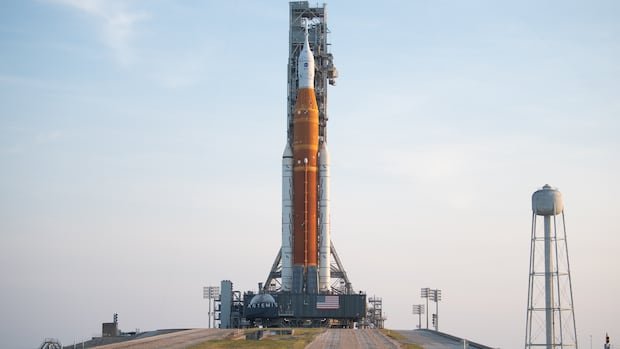


After a hiatus of 52 years, humans are preparing to return to the moon with NASA’s Artemis II mission. The upcoming milestone will feature four astronauts, including Canadian Jeremy Hansen and NASA astronauts Christina Koch, Reid Wiseman, and Victor Glover, who will orbit the moon. The mission is set to launch no earlier than February 6.
Before the astronauts embark on this historic journey, the rocket and spacecraft must undergo thorough checks. The massive 100-meter tall Space Launch System (SLS) is scheduled to roll out on Saturday for the mission.
The SLS and the Orion spacecraft, where the astronauts will reside for 10 days, were previously launched for the uncrewed Artemis I mission around the moon in 2022. Now, they are prepared to carry human passengers.
While the four astronauts will not land on the lunar surface during Artemis II, they will engage in lunar observations, experiments, and spacecraft testing to prepare for Artemis III, where astronauts are planned to walk on the moon, tentatively set for no earlier than 2028.
The rollout of the rocket on Saturday is expected to commence at 7 a.m. ET. The journey to the launch pad for the five million-kilogram rocket will take approximately eight to 12 hours. Various preparations, including retracting the crew access arm, will precede the rollout.
Following the rocket’s arrival at the launch pad, final connections will be made over the next day. The wet dress rehearsal, simulating launch day conditions with propellant loading, will be the next critical step before the actual launch. This practice run ensures that all systems are functioning correctly before the mission receives final clearance for liftoff.
Reflecting on the preparations, it was noted during a press conference that the experience gained from previous missions like Artemis I has contributed to refining the launch process for Artemis II.