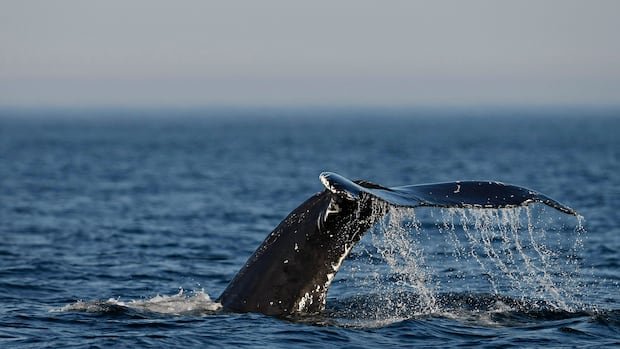


In light of warming waters in the Gulf of St. Lawrence, recent Canadian research indicates a shift in the diets of certain baleen whales due to changes in available prey. According to lead researcher Charlotte Tessier-Larivière from Université du Québec à Rimouski, the scarcity of Arctic krill, once a vital food source for fin whales, has led to a transition towards consuming more forage fish like capelin, mackerel, and herring. This dietary adjustment showcases the whales’ ability to adapt to varying prey availability, although the extent of their adaptive capabilities remains uncertain.
The study’s findings raise concerns about potential competition among whale species for the same fish resources and the implications of prey species depletion. Hanna Vatcher, a campaigner at Oceana, views the results as both promising and alarming, highlighting the significant impact of climate change on marine ecosystems and the need for adaptive management strategies.
Analyzing tissue samples collected over 28 years, researchers identified changes in carbon and nitrogen isotopes in the tissues of whales and their prey, indicating a shift towards increased consumption of forage fish by fin, minke, and humpback whales. Forage fish play a crucial role in marine food webs, serving as a foundational element for these ecosystems.
Despite similarities in their food sources, the study revealed evidence of resource partitioning among the whales, suggesting they target different fish species or locations to minimize competition. This behavior demonstrates the whales’ intelligence and ability to adapt to varying environmental conditions.
Janie Wray, CEO of BC Whales and North Coast Cetacean Society, emphasized the importance of studying whale behaviors to identify key marine habitats requiring protection. By understanding whale movements and feeding patterns, conservation efforts can be tailored to safeguard essential areas for these marine mammals.
The research underscores the necessity of dynamic conservation approaches that consider changing habitats and food availability driven by climate change. As whales adjust their foraging behaviors, adapting marine protected areas based on predictive models and climate projections will be crucial for ensuring the long-term well-being of these iconic species.