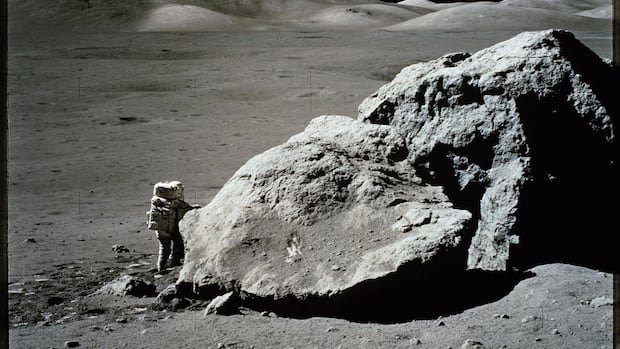


On July 20, 1969, the entire world held its breath as two American astronauts, Neil Armstrong and Buzz Aldrin, smoothly traversed the moon’s surface while Michael Collins observed from above in the command module. This event was expected to mark the beginning of a new era – the space age – where humanity would break free from the confines of Earth and venture into space.
Subsequent to six additional missions (including the infamous Apollo 13, which encountered an accident preventing a lunar landing), humanity’s aspirations of reaching the moon were halted after Apollo 17 in December 1972. Various factors have been suggested for this cessation, such as the costly Vietnam War, the achievement of the initial goal of outpacing the former Soviet Union to the moon, or diminishing public interest.
After 53 years since humans last approached the moon, NASA is initiating the ambitious Artemis program aimed at returning humans to the lunar surface in the coming years. The program’s objectives encompass scientific exploration and technological advancement, emphasizing the significance of human spaceflight for engineering progress.
The initial human lunar test under the Artemis II mission is scheduled for early February, featuring astronauts from NASA and the Canadian Space Agency. Although they will not land on the moon, their mission will entail orbiting the moon, marking the farthest journey by any human. This mission aims to evaluate critical hardware and conduct experiments to inform the subsequent Artemis III mission, set for 2028, which will witness astronauts making a return to the lunar surface, specifically targeting the moon’s south pole – an uncharted territory.
Apart from NASA’s Artemis program engaging 61 countries, China and India are also actively pursuing lunar missions, with China aiming to land humans on the moon by 2030 and India targeting a moon landing by 2040. The moon has become a focal point for global space exploration, with over a dozen private companies investing in the prospect of a sustained lunar presence.
While some may view lunar exploration as a costly venture with potentially more pressing priorities on Earth, space agencies and private entities regard it as a strategic investment. The involvement of private companies underscores the profit-driven aspect of lunar endeavors, emphasizing the long-term exploitation of lunar resources for various applications.
Additionally, lunar exploration yields scientific discoveries with practical implications for terrestrial technology and healthcare. The advancements stemming from space missions, like the Apollo program, have contributed to innovations in computing, food safety, and medical monitoring techniques. The transfer of technology from space missions has led to unexpected benefits in various fields, underscoring the broader impact of space exploration on society.
The emerging space economy is witnessing governments collaborating with companies to explore lunar resources and establish sustainable lunar infrastructure. Initiatives such as developing nuclear reactors for lunar applications and extracting resources like water and helium-3 are reshaping the space industry, creating new employment opportunities and driving economic growth.
As humanity embarks on a new chapter of lunar exploration, the potential long-term impact remains uncertain. While some view the return to the moon with skepticism, others like Ram Jakhu express optimism about the transformative potential of space exploration and artificial intelligence in shaping a new era for humanity.