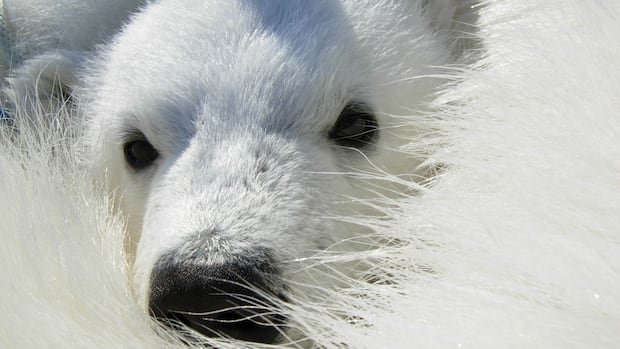


In the Arctic, encountering a polar bear is a situation most people hope to avoid. For generations, the Inuit have relied on their keen observation skills and traditional knowledge to spot these majestic animals. However, Polar Bears International saw an opportunity to enhance wildlife protection by incorporating technology.
The organization, led by Geoff York, the senior director of research and policy, explored the use of military-developed security systems for wildlife conservation. This initiative gave birth to “bear-dar,” a fixed radar system designed to scan the surroundings for any movement, serving as an early warning mechanism for communities in polar bear habitats.
The bear-dar technology, developed in collaboration with military tech developer Spotter Global, underwent rigorous testing in Churchill, Manitoba, a region frequented by polar bears. The system utilizes artificial intelligence to differentiate polar bears from other moving objects, with continuous training to improve its accuracy.
In August 2025, the bear-dar system was deployed at the Eureka weather station in Nunavut’s Qikiqtaaluk region, where Environment and Climate Change Canada (ECCC) staff and contractors operate. ECCC noted an uptick in polar bear sightings in the area, emphasizing the potential of bear-dar in enhancing staff safety by alerting them to wildlife presence, especially during periods of low light and polar darkness.
The technology’s success in Churchill has piqued the interest of communities in Svalbard, who are planning to trial the system during the upcoming winter. With polar bears increasingly venturing closer to human settlements due to climate change impacts, the bear-dar offers a promising tool for early detection and deterrence, as highlighted by citizen scientist and Polar Bears International ambassador Hilde Fålun Strøm.
While the bear-dar technology shows promise in safeguarding both humans and wildlife, its implementation comes at a cost. York mentioned that the base model package starts at around $60,000, with higher expenses for community-wide protection. Despite the investment, York emphasized that the focus remains on exploring the potential of visual detection software, leaving the radar business to private partners for further development.