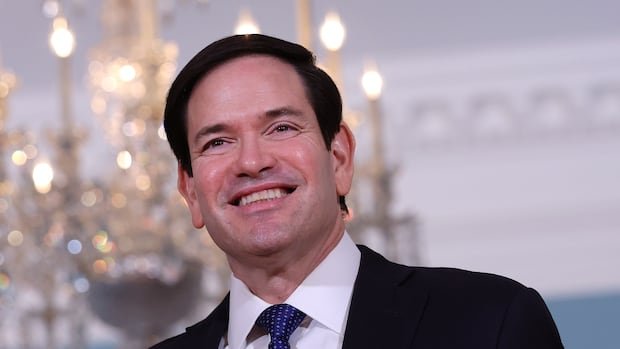


Senator Marco Rubio made a significant appearance at Mar-a-Lago following President Donald Trump’s announcement of Venezuelan President Nicolás Maduro’s capture, marking a pivotal moment in his prominent role within the Trump administration. The operation, involving over 150 U.S. aircraft infiltrating Venezuelan airspace as Delta Force commandos apprehended Maduro and his wife, resulted in charges of narco-terrorism conspiracy, cocaine importation conspiracy, and possession of weapons against the duo. Rubio’s message at Mar-a-Lago was unequivocal: “Don’t underestimate this president, as the outcome won’t be favorable.”
Raised in Miami by Cuban immigrant parents, Rubio’s upbringing instilled Cuban culture and anti-communist sentiments. As a Florida senator, he actively engaged in Latin and South American affairs, denouncing Maduro as a dictator and advocating against business ties with Venezuela. Rubio’s influence grew during Trump’s first term, shaping U.S. policy in the region despite their initial campaign disagreements.
In 2019, Rubio co-sponsored a bill aimed at restoring democracy in Venezuela and preparing for post-Maduro financial restructuring. While the U.S. aims to remove Maduro and cooperate with Vice President Delcy Rodríguez, threats loom if Rodriguez does not align with U.S. interests.
Rubio’s role evolved within the Trump administration, assuming the position of acting national security adviser and gaining an office in the White House. His involvement in the Venezuela operation was evident, reflecting his longstanding advocacy against the Maduro regime and Cuban influence.
Maduro’s capture could destabilize Cuba, a nation reliant on discounted Venezuelan oil. The potential fallout for Cuba, already grappling with economic challenges, could be significant. Rubio hinted at this during his Mar-a-Lago address, indicating potential concerns for the Cuban government.
The U.S.’s actions represent a major shift in regional dynamics, aligning with Trump’s new national security strategy authored by Rubio. The strategy emphasizes U.S. dominance in the Western Hemisphere, reflecting Rubio’s growing influence within the administration. Rubio’s role in shaping the strategy underscores his increasing prominence, although he modestly credits his involvement as part of a team dedicated to realizing the president’s vision.