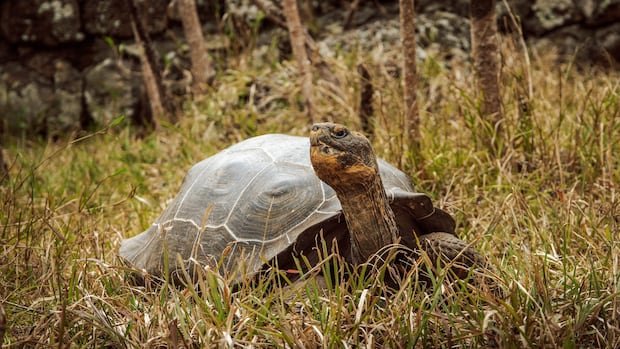


After more than 180 years, giant tortoises have made a remarkable comeback to Floreana Island in the Galápagos archipelago of Ecuador. In an effort led by scientists and local park rangers, 158 juvenile hybrids were reintroduced to the island as part of a captive “back breeding” program initiated in 2017. This initiative aims to revive the population of giant tortoises on the island, which was once home to an estimated 20,000 of these creatures before facing extinction due to various threats like whalers, a devastating fire, and human exploitation in the 1840s.
Conservation biologist James Gibbs expressed his joy at witnessing the release of the tortoises, comparing it to a parental moment of seeing one’s children take their first steps. The released juveniles, expected to grow up to 600 pounds within the next couple of decades, are part of a larger plan to gradually reintroduce 700 tortoises to Floreana. These juveniles carry a significant genetic resemblance to the extinct Floreana species, making their reintroduction crucial for the island’s ecosystem.
Biologist Washington Tapia emphasized the importance of not only increasing the tortoise population but also restoring the island’s lost lineage by reintroducing genetically similar species. The hope is that these juvenile tortoises, aged between eight and 13 and weighing 30 to 50 pounds, will contribute to the ecosystem’s recovery over time, given their potentially long lifespans exceeding a century.
During the release process, the tortoises were carefully transported by Gibbs and park rangers to designated release sites on the island. Divided into two groups, the tortoises were set free in different areas of the island, where they will coexist with the island’s human residents and diverse wildlife, including flamingos, iguanas, penguins, gulls, and hawks. However, they will also face challenges from non-native species introduced by humans, such as rats, cats, pigs, and donkeys, as well as invasive plants like blackberry and guava.
To monitor the tortoises’ movements and ensure their adaptation to the island, each juvenile has been equipped with GPS trackers. This technology enables researchers to track the tortoises in real-time, ensuring their well-being and integration into their new or rather, old habitat.
The release of the giant tortoises signifies a significant step towards the restoration of the island’s ecosystem and the conservation of these iconic species.