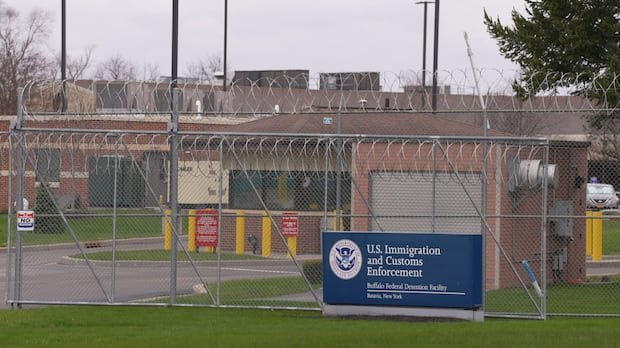


Last week, a second Native American-owned company announced the termination of a multi-million dollar contract with United States Immigration and Customs Enforcement (ICE) due to community pressure.
A branch of Oneida ESC Group, owned by the Oneida Nation of Wisconsin, canceled a substantial $3.8 million contract with ICE for engineering and inspection of federal facilities. This decision came after the Oneida government condemned the contract and replaced the subsidiary’s board of managers.
Chairman Tahassi Hill of the Oneida Nation of Wisconsin emphasized the importance of nations having the authority to uphold their own vision and values. He highlighted the need to take immediate action when faced with conflicts that go against their laws, policies, and core values.
In a similar move last month, Prairie Band Potawatomi Nation in Kansas terminated a $29.9 million contract with ICE for planning, research, and concept designs for secure structures. The tribal chairman, Joseph “Zeke” Rupnick, expressed concerns about participating in activities reminiscent of past harm inflicted on their people.
Becky Webster, a former senior staff attorney for the Oneida Nation of Wisconsin, noted that tribal corporations operate independently to diversify economic ventures and shield nations from certain legal responsibilities. She expressed surprise upon learning about the ICE contract, stating that it contradicted the values she believed the tribe upheld.
Matthew L. M. Fletcher, a law professor at the University of Michigan, explained that these contracts stem from affirmative action programs supporting historically disadvantaged, minority-owned businesses. Tribally owned corporations, Alaska Native corporations, and Native Hawaiian organizations with majority tribal ownership are eligible for preferential treatment in federal contracting through the 8(a) program.
While some affirmative action programs have been discontinued, the 8(a) program remains unaffected. Fletcher highlighted the attractiveness of such contracting to tribes due to their unique legal standing, which exempts them from certain regulatory obligations and allows for non-disclosure in matters of national security.
Additionally, Akima, a subsidiary of NANA Regional Corporation owned by 11 Iñupiaq villages, holds significant contracts with the Department of Homeland Security and ICE, including services related to detention facilities. NANA emphasized its commitment to aligning operations with legal and ethical standards while upholding Iñupiat Iḷitqusiat values.
The use of pass-through entities by tribal corporations in federal contracting was also highlighted by Fletcher, mentioning other Native American groups involved in logistics work for the government. Writer and environmentalist Winona LaDuke criticized the trend of turning Indigenous people into corporations, likening it to a form of colonization.
She urged tribes like the Prairie Band Potawatomi Nation and Oneida Nation of Wisconsin to exercise caution in their business dealings to prevent similar controversies in the future. LaDuke deemed certain contracts taken by Alaska Native corporations as morally objectionable and emphasized the need for Indigenous communities to prioritize their values over financial gains.