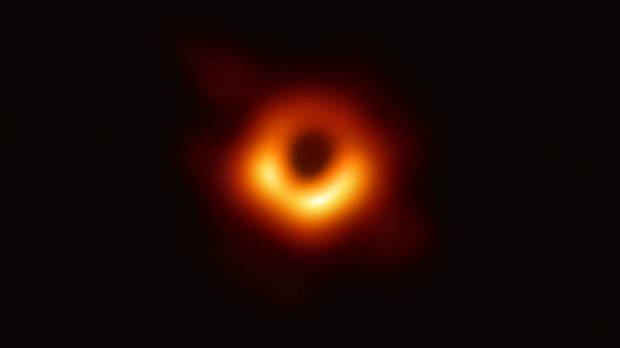


A team of astronomers is actively working on producing the first-ever video footage of a black hole, challenging common misconceptions about these celestial entities. According to astrophysicist Sera Markoff, black holes are not just cosmic vacuums that consume everything in their vicinity as often depicted by the media. The team’s endeavor aims to shed light on the enigmatic behaviors of black holes, unveiling a wealth of unanswered questions in the realm of astrophysics.
In 2019, a significant milestone was achieved when scientists unveiled the first image of a supermassive black hole located at the core of the Messier 87 (M87) galaxy, approximately 50 million light-years away from Earth. This groundbreaking achievement was made possible by the Event Horizon Telescope, a collaboration of eight radio telescopes operating as a unified instrument across various global locations from Antarctica to Spain and Chile.
The team, spearheaded by Markoff, is leveraging the capabilities of the Event Horizon Telescope to monitor the movements of the colossal black hole within M87. With a total of 12 telescopes involved in the project, the enhanced observational frequency, occurring every three to four days from March to April, will enable astronomers to capture the dynamic motion of the black hole more vividly.
Unlike other rapidly evolving black holes, the M87 black hole offers a unique opportunity for observation due to its relatively slower evolutionary pace, lasting several days to over a week. Vincent Fish, the operations data manager for the project, highlights that this gradual evolution allows the team to compile nightly data into comprehensive images, forming a chronological “time-lapse movie” documenting the black hole’s motion.
The research not only focuses on the black holes themselves but also on the dynamic interactions of the surrounding hot gas swirling around them. Markoff emphasizes that by monitoring this material, astronomers can witness the ever-changing turbulent disk surrounding the black hole, capturing subtle shifts and transformations occurring over days to weeks.
The extensive dataset collected by the telescopes will undergo meticulous processing before unveiling critical insights into the extreme physics governing black holes. Markoff anticipates that the forthcoming video footage will provide invaluable clues to unravel longstanding debates surrounding black hole dynamics, such as their rotational direction, feeding mechanisms, and the formation of powerful plasma jets.
Moreover, understanding the intricate processes tied to black holes is essential as their influence extends far beyond their immediate vicinity. Markoff underscores the crucial role of black holes in regulating galactic feedback, where energy emitted through jets can impact the surrounding environment by preventing gas from cooling and forming new stars.
In essence, the quest to capture the first-ever video of a black hole symbolizes a monumental leap in astrophysical research, offering a gateway to deciphering the cosmic mysteries that shape our universe’s evolution.