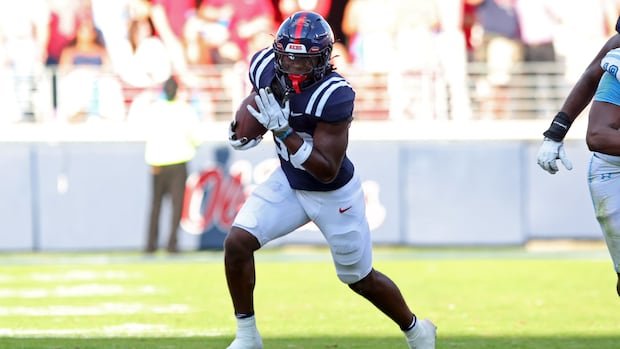


Shekai Mills-Knight, a freshman running back at Ole Miss, is set to garner attention during the upcoming NCAA semifinal football game against the Miami Hurricanes in Glendale, Arizona. However, his journey to the spotlight traces back a decade when he faced disqualification as a grade-schooler in Dollard-Des-Ormeaux, a suburb of Montreal, for being deemed too heavy for the local little league due to weighing 11 pounds over the limit. Despite his family’s insistence that it was a typo and he actually weighed 101 pounds, the decision stood, resulting in his team forfeiting four wins.
Fast forward to the present, Mills-Knight has excelled in various sports during his time at Baylor School in Chattanooga, Tennessee, before joining Ole Miss. Although his playing time at the university has been limited so far, his impressive physical stature of 6-foot-3 and 220 pounds, reminiscent of Derrick Henry, hints at his promising future in the sport.
As he continues to make strides in his football career at just 19 years old, Canadians like Mills-Knight are making their mark in high-level competitions. With Miami also featuring Toronto-born Nino Francavilla and Ottawa-native Akheem Mesidor, the success of Canadian players in football is gaining recognition. This trend extends to the NFL, where 24 Canadian-born players were part of rosters this season, showcasing the talent pipeline from Canada to the U.S.
Despite the evolving landscape of college football in the U.S., with controversies surrounding player contracts, loyalty, and amateurism, the sport’s popularity remains unwavering. The drama and unpredictability inherent in college football, akin to a soap opera, captivate millions of viewers, making it a compelling spectacle on television.
Amidst the chaos and intrigue of the college football scene, Canadians continue to play pivotal roles, adding unique subplots to the narrative. Their success not only reflects the growing prominence of Canadian football talent but also presents opportunities for the sport to expand its reach and appeal across borders.
While the differences between the U.S. playoffs and the Vanier Cup are stark, there are valuable lessons that U Sports can glean from the NCAA in terms of visibility and marketing strategies. By enhancing broadcast presence and engaging fans year-round, U Sports can elevate its profile and create compelling storylines that resonate with audiences on both sides of the border.
In a sports landscape where Canadian players are increasingly making waves in college football, the potential for growth and recognition is on the rise, signaling a bright future for the sport in Canada and beyond.