
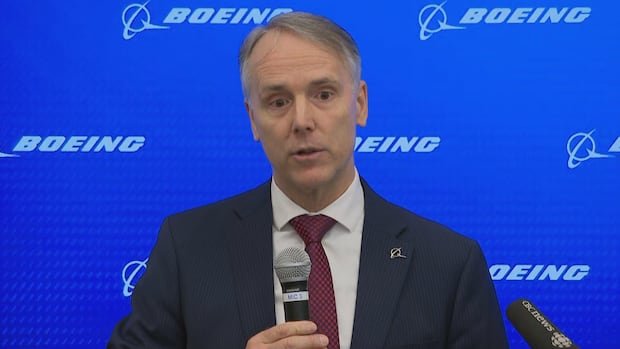


Boeing has unveiled plans to allocate $36 million towards research and development initiatives focusing on composite aerospace manufacturing at its Winnipeg plant. The company’s president, Al Meinzinger, expressed enthusiasm for the future during a press conference where he highlighted Winnipeg’s status as Canada’s premier advanced composite facility pivotal to the aerospace industry for over five decades.
The funding will support projects aimed at improving composite fabrication capabilities through advanced processes and collaborative robotics. Some of these endeavors will involve collaboration with the National Research Council of Canada. Composite materials used in aircraft production are integral for enhancing fuel efficiency and reducing weight.
Ibrahim Yimer, the Vice President of Transportation and Manufacturing at the National Research Council, emphasized the significance of industry-government partnerships demonstrated by this investment. Matt Baxter, an Engineering Senior Manager at Boeing’s Winnipeg facility, stated that the funding will expedite automation projects targeting repetitive and physically demanding tasks to enhance workplace safety, product quality, and production efficiency.
This initiative aligns with the federal government’s industrial and technological benefits policy, which designated Boeing’s CP-8A Poseidon as Canada’s multi-mission aircraft. The policy aims to allocate 70% of defense contracts to Canadian firms within the next decade.
Members of Parliament, including Doug Eyolfson and Ben Carr, lauded the investment’s impact on Winnipeg’s aerospace sector, recognizing the region’s global competitiveness and potential for future growth. Premier Wab Kinew highlighted upcoming investments in Manitoba’s aerospace industry following discussions with Prime Minister Mark Carney.
Mayor Scott Gillingham emphasized Winnipeg’s “sky economy,” encompassing aviation, aerospace, and defense sectors that are integral to the city’s future. He emphasized the potential for job creation, scientific advancements, trade opportunities, and community development within these sectors.
The investment by Boeing underscores Winnipeg’s position as a key player in the aerospace industry, fostering economic growth and job opportunities. The city looks forward to continued collaboration and innovation in this critical sector.