
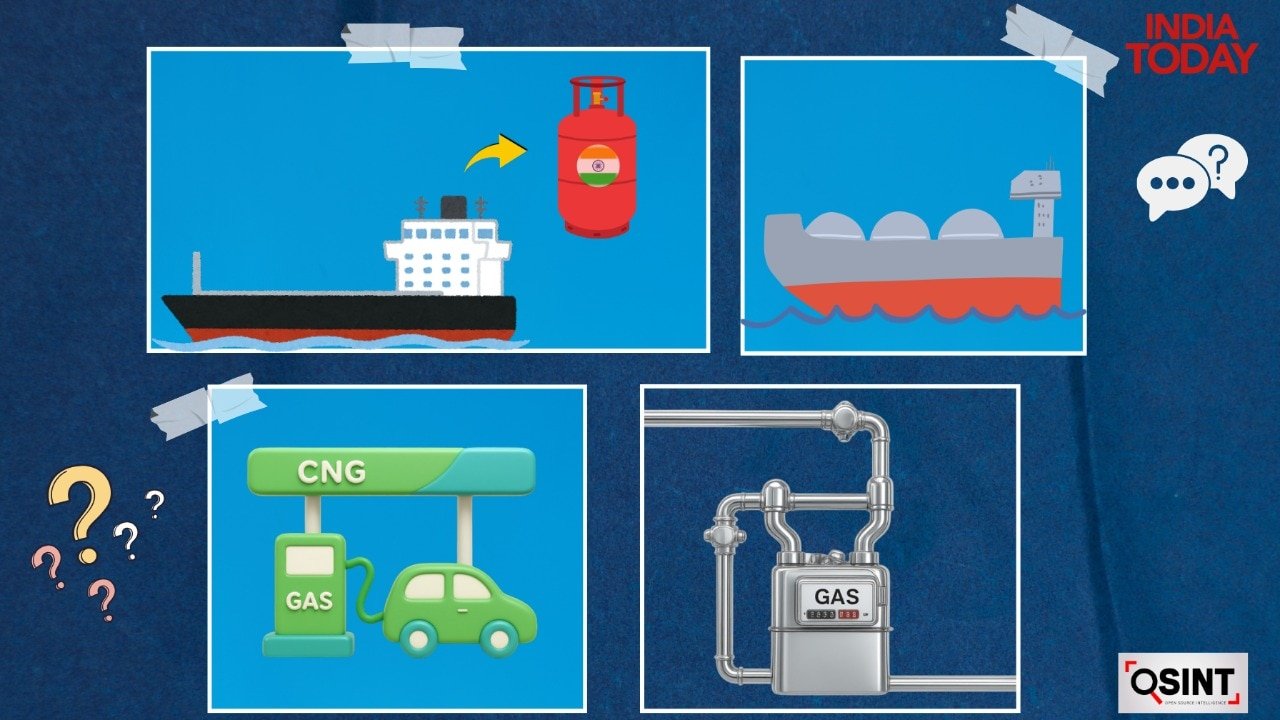


In many Indian households, the red LPG gas cylinder is a staple item in the kitchen. However, a significant shift is now taking place in everyday kitchens across the country. In regions where Piped Natural Gas (PNG) networks are accessible, the government has directed a transition to PNG connections within a three-month timeframe.
The energy crisis within households has intensified due to the prolonged conflict in the Middle East, resulting in severe disruptions to the global fuel market. Approximately 18 vessels carrying Indian fuel are currently stranded in the Gulf region, exacerbating the situation.
As a response, India is endeavoring to transition from using LPG cylinders to PNG pipelines. This transition, though essential, is complex and not without challenges. The move poses numerous immediate questions and uncertainties for over 33 crore LPG users. Some of the common queries revolve around the reasons for not increasing domestic LPG production, the distinctions between LPG and PNG, and the logistics of cylinder-delivered gas versus piped gas.
Despite these challenges, the shift towards piped gas is gradually gaining momentum, with around 95.3% of reported household gas connections still reliant on LPG, while only 4.7% have adopted PNG. The move to piped gas is in its nascent stages and is concentrated in specific urbanized markets, with Delhi, Gujarat, and Maharashtra leading the transition.
LPG, PNG, CNG, and LNG are all variants of natural gas, each processed and delivered differently. LPG, primarily composed of propane and butane, is a by-product of crude oil refining. In contrast, PNG, CNG, and LNG are forms of natural gas, predominantly methane, processed for distribution through pipelines, compression, or liquefaction.
In India, LPG is predominantly sourced from refineries, while natural gas is extracted from gas wells and oil-and-gas fields. LNG, which is imported through terminals, is regasified before being distributed through pipelines for various applications like PNG, CNG, and industrial use.
India’s heavy reliance on LNG imports underscores the country’s limited reserves of oil and gas. Despite having domestic gas fields, production falls short of meeting demand, necessitating significant LNG imports. The distinction between LPG and LNG lies in their production processes, with LPG derived from crude oil refining and LNG predominantly sourced through imports.
While facing supply challenges, India has managed to maintain stability in LPG distribution, with no reported shortages at distributorships. The government has implemented measures to ensure uninterrupted supply to critical sectors, such as domestic PNG and CNG, amidst the disruptions in the global gas market. Additionally, efforts are being made to secure additional LNG shipments to stabilize the gas supply system and prioritize essential sectors like households and transportation.