
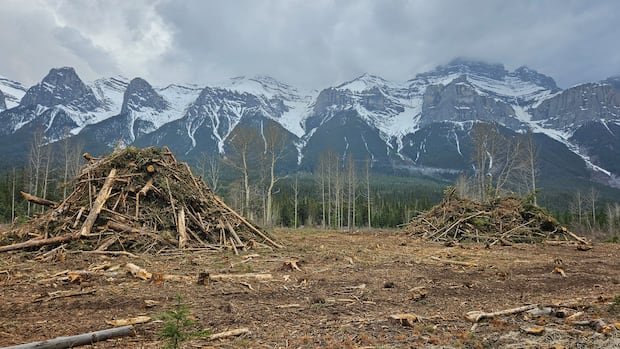


Fireguards play a crucial role in safeguarding individuals and communities by creating open spaces to impede the spread of wildfires. Over the past five years, significant portions of forested land have been cleared in areas spanning from Lake Louise through Banff and Canmore into Kananaskis Country, with ongoing efforts in place. This initiative extends benefits not only to residents and visitors but also to wildlife such as elk, grizzly bears, and various bird species.
Shelley Tamelin, a wildfire risk reduction manager for Parks Canada, highlighted that wildlife utilize these cleared areas for movement and feeding. Although the construction of fireguards initially disrupts wildlife activities due to human and machinery presence, the subsequent growth of vegetation like willows, grasses, and shrubs provides enhanced food sources and habitat. Bill Hunt, the senior director of conservation programs at the Yellowstone to Yukon Conservation Initiative, emphasized that these newly exposed lands offer diverse opportunities for nesting birds, foraging ungulates, and bears seeking foods like buffaloberries.
The deliberate planning of fireguards, a process spanning five to 10 years before tree removal, prioritizes areas with natural openings to minimize tree clearances. By engaging in consultations with regional stakeholders and conducting impact studies on wildlife, officials ensure that the logging activities from mid-November to March coincide with frozen ground conditions and protected soil.
The ultimate goal of fireguards is not only to reduce the risk of wildfires but also to create safe open spaces for wildlife movement, steering them away from human-populated areas prone to conflicts. With tourism in the Bow Valley steadily increasing, it is crucial for various groups to collaborate in managing human activities in shared outdoor spaces. John Paczkowski, an Alberta Parks biologist, highlighted the importance of secure patches for wildlife to prevent encounters in urban areas and showcased data indicating that a significant portion of grizzly bear movements occur in forest openings.
The implementation of fireguards aligns with recommendations from the Bow Valley human-wildlife co-existence report, emphasizing the enhancement of wildlife habitats through logging and prescribed fires. Surveillance through wildlife cameras aids in monitoring wildlife adaptations in response to these habitat enhancements. The ongoing efforts to restore habitats at a large scale reflect a shared vision towards coexistence between humans, visitors, and wildlife in these natural landscapes.