
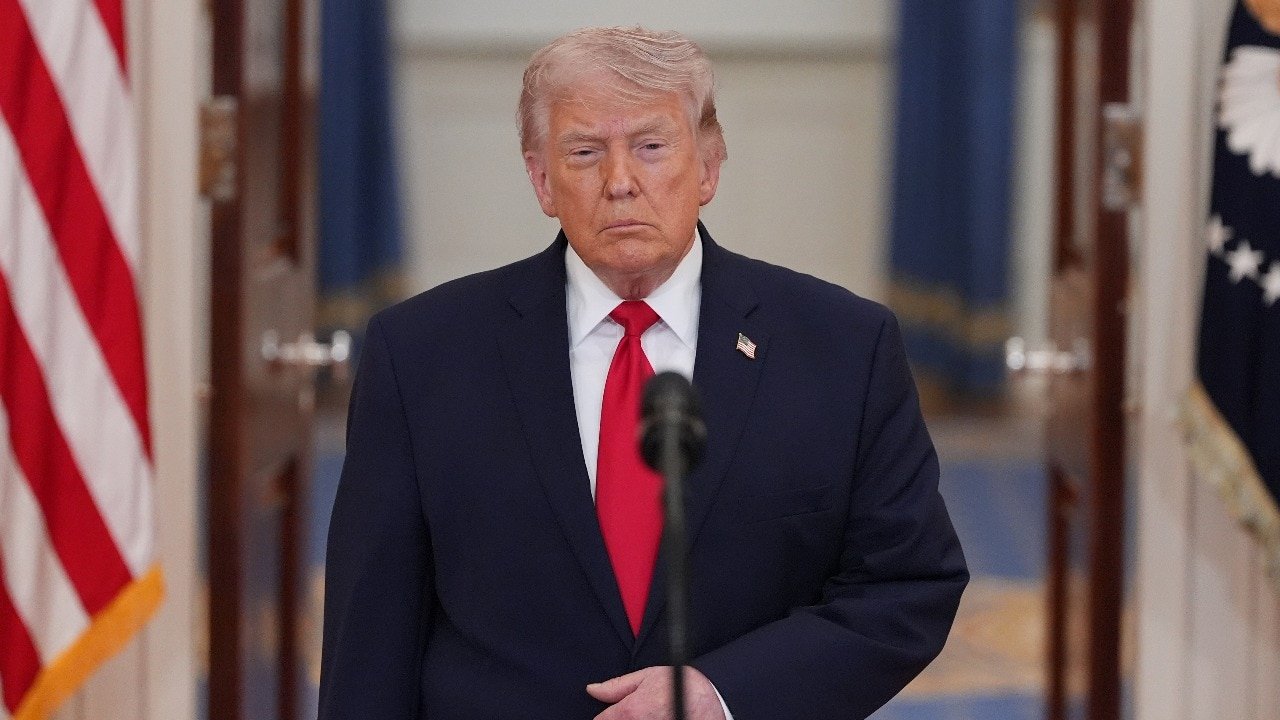

President Trump has revealed a comprehensive 2027 federal budget plan that emphasizes an unprecedented boost in military spending while proposing significant cuts to domestic programs. The budget allocates USD 1.5 trillion towards defense, marking the largest such request in decades, signaling the administration’s commitment to strengthening US military capabilities.
The increase in defense funding was expected, especially given escalating geopolitical tensions and a US-led conflict involving Iran. The administration justifies the emphasis on defense by stating it is crucial for national security and global stability, with the budget document affirming Trump’s dedication to rebuilding the military for peace through strength.
Simultaneously, the proposal suggests a 10% reduction in non-defense spending, advocating for the transfer of certain federal responsibilities, like childcare and healthcare aspects, to state and local governments. Trump reiterated this stance, highlighting the challenge of funding wars and expansive domestic programs simultaneously, emphasizing the need for a state-based approach to certain services.
While the president’s budget represents policy priorities, it does not have legal authority. Congress holds the power to determine federal spending and often adjusts or rejects presidential proposals. The budget, crafted by Budget Director Russ Vought, serves as a policy framework to guide lawmakers in shaping appropriations bills, setting the stage for potential clashes in Congress over defense and domestic expenditure debates.
Lawmakers face the dilemma of balancing priorities amidst significant federal deficits of nearly USD 2 trillion annually and total national debt surpassing USD 39 trillion. A substantial portion of the budget is automatically allocated to entitlement programs like Social Security, Medicare, and Medicaid, driven by demographic shifts, particularly an aging population.
The proposed budget also outlines specific priorities, including a 13% increase in Department of Justice funding targeting violent criminals, a USD 10 billion fund for National Park Service beautification projects in Washington, DC, and a USD 481 million boost for aviation safety and air traffic controller recruitment.
To advance key elements of the budget, the administration relies on Republican support in Congress, proposing USD 1.1 trillion in defense spending through regular appropriations requiring bipartisan backing, while USD 350 billion would go through budget reconciliation for passage with a simple majority.
Amid ongoing disputes over current-year funding and a prolonged government shutdown, the administration aims to influence the broader fiscal debate with its proposal, signaling a shift towards elevated defense spending and a reduced federal role in domestic policy. Congress, as demonstrated in the past, has shown willingness to diverge from White House plans, particularly regarding domestic spending cuts, often preserving or marginally reducing targeted programs.
As discussions for the 2027 budget unfold, Trump’s proposal underscores a clear change in priorities, accentuating defense spending and advocating for a more streamlined federal approach to domestic affairs.