
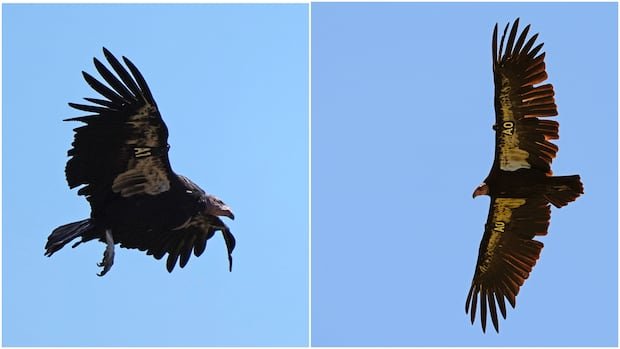

Conservationists in Northern California recently had a scare when a male condor appeared motionless for hours following a transmitter alert. However, it turned out to be a positive development. The bird was actually incubating an egg, as confirmed by wildlife biologist Chris West from the Yurok Tribe Wildlife Department. While the egg’s existence hasn’t been visually verified, the male and his mate are taking turns guarding a nest in the Redwood National and State Parks, potentially hatching the first wild chick in Northern California in over 130 years.
This significant event marks a major achievement for the Yurok Tribe, which has been collaborating with authorities for nearly two decades to reintroduce condors to the area after near extinction due to historical factors. West, who oversees the Northern California Condor Restoration Program, expressed excitement over the prospect of the pair producing the next generation of wild birds in the region.
The California condors, once widespread along the west coast, faced severe threats such as poaching, habitat loss, and lead poisoning, leading to a dramatic decline in their population. Thanks to conservation efforts, captive breeding, and release programs, their numbers have rebounded to 392 individuals, with 24 residing in Northern California. The emergence of a breeding pair offers hope for further growth in the local condor population.
The female condor, A0, known as Ney-gem’ ‘Ne-chween-kah in Yurok, and her mate, A1, named Hlow Hoo-letl, have displayed strong bonding behavior, indicating their readiness for reproduction. West highlighted the birds’ secluded behavior and predicted the presence of an egg based on their movements, a common method used by scientists to monitor remote nests.
Despite being inexperienced parents, the condor pair is actively tending to the potential egg, with the male demonstrating improved nesting behavior over time. West remains cautiously optimistic about the hatching outcome, emphasizing that even if unsuccessful this time, the birds will persist in their breeding attempts. The situation serves as a valuable learning experience for the pair as they strive to contribute to the region’s condor population growth.