
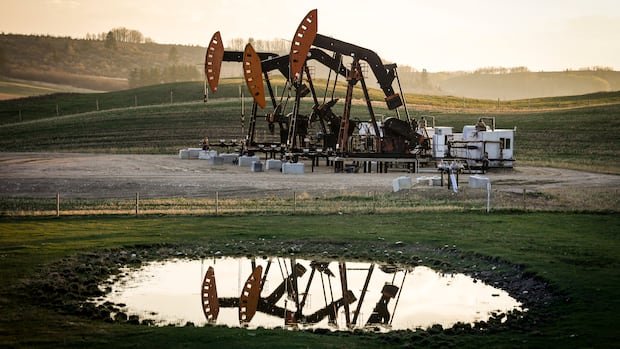

Energy industry experts and analysts are cautioning that the prices of oil and gas are poised to surge due to dwindling reserves and the continued closure of the Strait of Hormuz.
The price for Brent crude futures stood at $98.20 US per barrel on Wednesday afternoon, but projections suggest it could skyrocket to $150 US or more in the near future. This anticipated spike is primarily attributed to diminishing optimism regarding a potential U.S.-Iran agreement to reopen the Strait, coupled with persistent demand in certain markets as reserves rapidly diminish.
During a conference in New York, Neil Chapman, a senior vice-president at ExxonMobil, highlighted the imminent depletion of inventory levels, emphasizing the likelihood of a sharp price increase once critical levels are reached. Chapman suggested that prices could surge to $150 US to $160 US within the mentioned timeframe.
In a recent interview with Bloomberg Talks, Chevron CEO Mike Wirth echoed concerns about declining reserve levels, noting the steady reduction of inventories globally. Wirth emphasized the critical nature of the upcoming months, hinting at potential challenges ahead.
In response to the Middle East conflict, 32 International Energy Agency members decided in March to release 400 million barrels of oil from emergency reserves. The U.S. Strategic Petroleum Reserve, as per the latest Department of Energy report, currently holds 357.1 million barrels of oil, marking a significant drop since the conflict in February 2026. Chevron’s Wirth refrained from labeling the situation as a crisis but acknowledged the market’s challenging position.
Despite ongoing discussions between the U.S. and Iran about reopening the Strait of Hormuz, the region’s tensions persist, with Iran recently targeting U.S. military bases in the Gulf region, leading to a rise in oil prices. The uncertain geopolitical landscape has left energy executives and analysts frustrated by what they perceive as artificially low oil prices, considering the prevailing circumstances.
Amidst these developments, concerns are mounting about the potential long-term impacts on oil prices, with experts warning that prices are likely to remain elevated until at least 2027. The uncertainty surrounding the reopening of the Strait adds to the complexities, as the market awaits concrete actions to alleviate the supply constraints.
The persistent demand for fuel in Canada, despite supply constraints and price surges, presents a unique challenge. As summer approaches and demand for gasoline peaks, the prospect of further price increases looms, potentially pushing gas prices above $2 per litre.
While Canada and the U.S. have somewhat shielded themselves from the immediate effects of the Strait’s closure, the global ramifications are evident, prompting countries in Asia to implement measures to mitigate the impact. Higher oil prices, while beneficial to the Canadian economy to some extent, also raise concerns about inflation and potential interest rate hikes.
The evolving energy landscape underscores the need for swift resolutions to the ongoing conflicts and geopolitical tensions that continue to shape the oil and gas markets, with industry experts closely monitoring the developments for potential market impacts.