
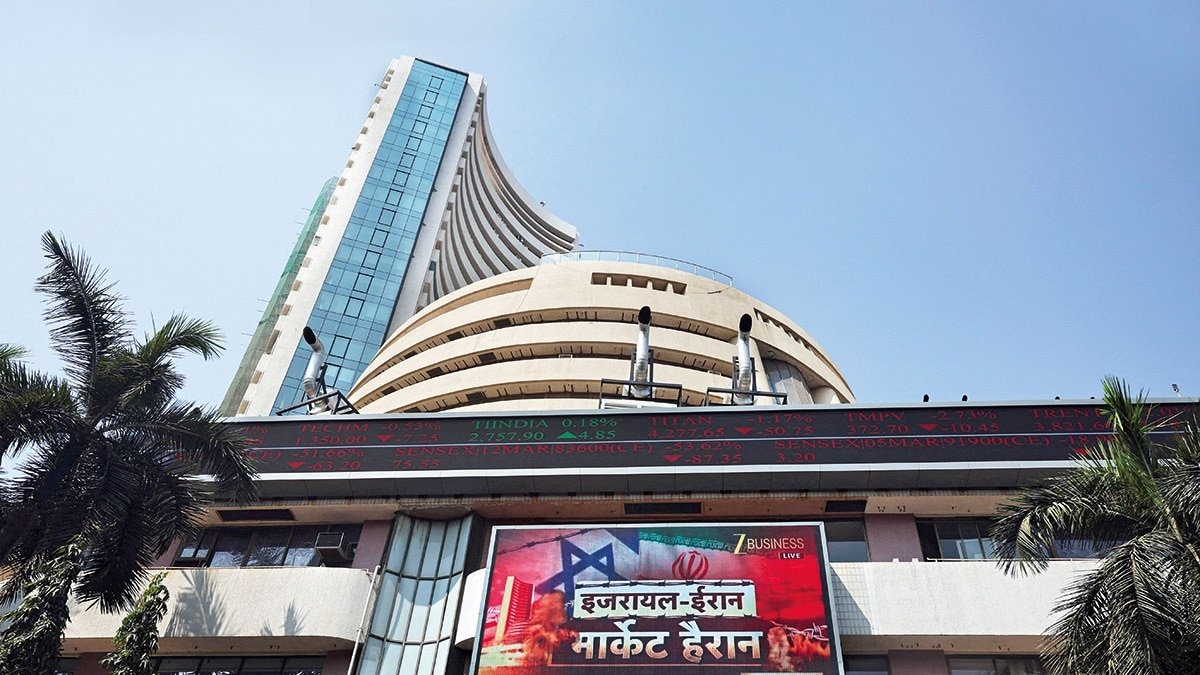

Domestic stock markets made a partial recovery during Monday’s trading session but ultimately closed lower as early losses proved challenging to fully reverse. The Sensex concluded at 76,847.57, down 702.68 points (0.91%), while the Nifty finished at 23,842.65, down 207.95 points (0.86%), indicating sustained pressure despite some recovery from intraday lows.
The markets opened significantly lower, with the Sensex dropping over 1,600 points at the start of the day due to global risk aversion triggered by escalating geopolitical tensions and a surge in crude oil prices.
Although the indices recovered a significant portion of their losses as the day progressed, the market closed in the red, emphasizing the lingering fragility in investor sentiment. The recovery was insufficient to push the market into positive territory, indicating that investors, while less panicked, remained cautious and hesitant to take aggressive positions in the uncertain climate.
The initial sell-off was driven by a sharp increase in crude oil prices exceeding $100 per barrel, fueled by escalating tensions in West Asia and concerns over possible disruptions in the Strait of Hormuz. For an oil-importing nation like India, elevated oil prices raise worries about inflation, currency devaluation, and the overall economic outlook, all of which exert downward pressure on equities.
Among various sectors, auto stocks took a significant hit, with major players like Maruti Suzuki and Eicher Motors experiencing notable declines. The decline in auto stocks is attributed to multiple factors, including reduced consumer demand due to higher fuel costs and increased manufacturing expenses. Additionally, recent labor disputes in key industrial zones have added uncertainty, posing risks of production disruptions and supply chain issues.
The market’s attempt to stabilize after the initial shock rather than a full recovery indicates ongoing volatility. While some support is evident at lower levels, the failure to turn positive signifies persistent elevated risks. Market direction is expected to be closely linked to global events, particularly oil price fluctuations and geopolitical developments. Continued high oil prices or further escalations in tensions could lead to continued market volatility, whereas a reduction in global risks could help stabilize sentiment.
In conclusion, while the worst of the panic may have subsided for the day, uncertainty lingers in the market, emphasizing the need for caution among investors amidst ongoing volatility and external pressures.