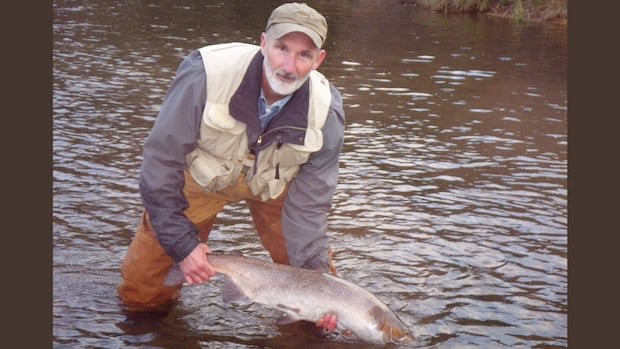


A federal advisory committee has broadened its list of imperiled Atlantic salmon populations, causing concern among conservation groups in Cape Breton. They are apprehensive that this adjustment may result in the cessation of recreational fishing for one of the East Coast’s iconic species in most of New Brunswick, Prince Edward Island, and Nova Scotia. While the Department of Fisheries and Oceans acknowledges this possibility, it emphasizes that it is not a definite outcome.
The revised assessment status was unveiled during federal fisheries meetings with stakeholders earlier this month, subsequent to the Committee on the Status of Endangered Wildlife in Canada (COSEWIC) reevaluating salmon populations, encompassing those along the whole Nova Scotia coast and throughout the southern Gulf of St. Lawrence.
Rene Aucoin, president of the Cheticamp River Salmon Association, participated in one of these meetings. He expressed surprise at the announcement made towards the end, describing it as unexpected. Aucoin noted that while salmon populations along Nova Scotia’s Atlantic coast are facing challenges, the situation is different on the western side of Cape Breton Island. He highlighted the success of the rivers in recent years, citing a notable salmon return in 2023 as evidence of their strength.
Bill Hailey, vice-president of the Margaree Salmon Association, echoed Aucoin’s sentiments, emphasizing that while salmon in New Brunswick’s Miramichi River are struggling due to a growing striped bass population, the Margaree River is faring well.
Concerns have been raised by Hailey and Aucoin regarding the potential inclusion of Nova Scotia and southern Gulf salmon populations under the Species at Risk Act. They fear that such a move could lead to the end of recreational angling, even catch-and-release activities.
The process of listing a species as endangered under federal legislation is complex and extensive, involving consultations with the public, conservation organizations, industry, and First Nations. Despite the opportunity for stakeholders to voice their opposition to a permanent change in salmon status, the prolonged nature of the process is a cause for concern.
DFO’s manager of biodiversity management in the Gulf region, Robert Jones, acknowledged the likelihood of an endangered listing under federal law but emphasized that it is not a foregone conclusion. He highlighted the importance of considering scientific advice and socio-economic factors in decisions concerning the listing of species or populations under the Species at Risk Act.
While an Atlantic salmon conservation strategy has been initiated by DFO to rebuild fish stocks, criticisms have emerged regarding the adequacy of funding for the strategy. COSEWIC is expected to provide recommendations to Environment and Climate Change Canada in the fall, with economic impact, conservation efforts, social implications, and Indigenous perspectives factored into the decision-making process.