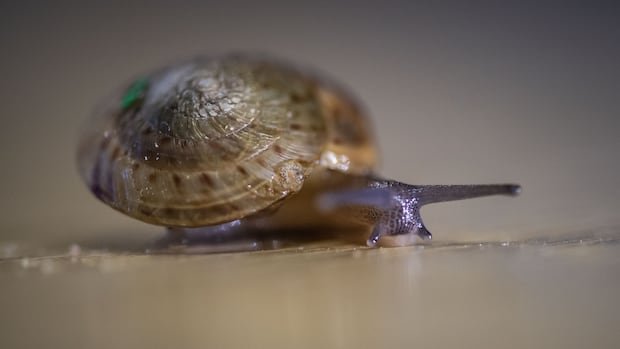


A decade ago, the greater Bermuda land snails, the only surviving population known at the time, were found in an alleyway in Hamilton’s capital city. They had adapted to living on concrete slabs near a dripping air conditioner, thriving in that environment. Today, these native creatures seem to be flourishing in their natural habitat once again, all thanks to the dedicated efforts of conservationists. Over the past seven years, more than 10,000 snails have been bred in captivity and released into Bermuda’s protected wooded areas.
Katie Kelton, an invertebrate zookeeper at the Chester Zoo in the U.K., expressed great satisfaction with the snails’ progress during an interview with host Nil Köksal on “As It Happens.” Kelton described the confirmed breeding success and the increasing population numbers as clear indicators of the project’s triumph.
The collaborative initiative involving Chester Zoo, Biolinx Environmental Research based in Canada, and the Bermuda government has been instrumental in preventing the species from facing extinction. A forthcoming publication in the journal “Oryx, The International Journal of Conservation” will document the program’s achievements.
Despite the positive strides made, the snails are not out of danger yet. Threats such as habitat loss and invasive predator species continue to pose risks to their survival, similar to the challenges that nearly eradicated them in the past.
These small snails, scientifically known as P. bermudensis, may be tiny like a button or a quarter, but they play a crucial role in Bermuda’s ecosystems, where they are exclusively found. Serving as decomposers, they aid in breaking down leaf litter and enriching the soil with nutrients. Additionally, their shells provide essential calcium for native birds and reptiles, supporting their reproductive processes.
Kelton emphasized the snails’ aesthetic appeal, describing them as “really cute and pretty” due to their intricate patterns. The International Union for Conservation of Nature (IUCN) lists P. bermudensis as critically endangered, highlighting the significance of ongoing conservation efforts.
While celebrating the successful reintroduction of the snails during Reverse The Red Day, the IUCN acknowledged the importance of biodiversity preservation. The challenging task of breeding and reintroducing the snails required extensive research and dedication from the conservationists involved.
Timothy Pearce, a mollusk curator at the Carnegie Museum of Natural History, commended the team’s achievements in reintroducing the snails to secure areas but cautioned about the long-term challenges they may face. The survival of the snails in their rewilded habitats remains a subject of ongoing monitoring and conservation efforts.
The rewilding process has seen varying levels of success across different sites in Bermuda, with some locations proving more conducive to the snails’ reproduction and integration into the ecosystem. Notably, Nonsuch Island, a nature reserve, has provided a favorable environment for the snails to thrive and expand their presence.
Continuous vigilance and conservation measures, including birth control for invasive predators and public awareness campaigns, are crucial to safeguarding the reintroduced snail colonies. Kelton expressed her pride in contributing to the rescue of these beloved snails, underscoring the importance of giving every species a fighting chance at survival.