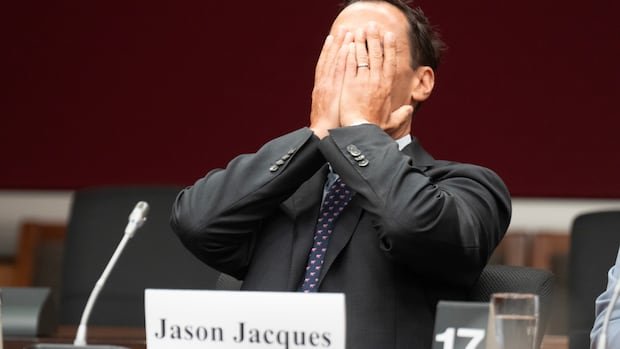


This year, changes are expected at Canada’s fiscal watchdog as Interim Parliamentary Budget Officer Jason Jacques may either be replaced or appointed permanently. Additionally, the Organization for Economic Co-operation and Development (OECD) is set to release its assessment of the office.
While the OECD report is still pending, Jon Blondal, who oversees the OECD’s public management and budgeting division, mentioned to CBC News that the feedback received so far has been positive. He emphasized that Canada is fortunate to have the PBO, which commands respect from various stakeholders.
Although the OECD has been scrutinizing the PBO’s office without focusing on any specific PBO, Canadian economists have been conducting similar evaluations. They argue that despite the office’s strong reputation, there is room for enhancement.
Suggestions from economists include a call for more data-driven content and less subjective commentary from the office’s leadership. They also advocate for an increased incorporation of peer review in the reports produced by the office.
These proposed changes are aimed at enhancing the office’s perceived objectivity and its ability to pinpoint potential inaccuracies or misinterpretations, especially in a politically charged environment.
Trevor Tombe, the director of fiscal and economic policy at the University of Calgary’s school of public policy, highlighted the natural scope for disagreement in analyzing complex policies and the importance of maintaining neutrality in the PBO’s assessments.
Former chief economist for TD Bank, Don Drummond, echoed the sentiment that analyzing intricate economic models can be challenging and may lead to errors, emphasizing the significance of the subsequent steps taken after an initial mistake.
The push for reduced commentary follows Jacques’s controversial statements about Canada’s federal finances during a parliamentary committee appearance in September. The usage of strong language like “stupefying” and “unsustainable” drew criticism from Kevin Page, Canada’s first PBO, who stressed the importance of neutrality in the office’s communications.
Different perspectives exist on the sustainability of Canada’s finances, with varying opinions on the potential impact of significant economic shocks. While some experts believe the current financial state is sustainable, others warn about the risks associated with unforeseen crises.
Blondal mentioned that the OECD’s evaluation will assess the PBO against specific benchmarks, including the extent to which peer review is integrated into its research processes. The discussion around the PBO’s analysis of the carbon tax has prompted calls for more extensive peer review to ensure robust and unbiased assessments.
Despite potential controversies, Jacques expressed openness to expanding peer review practices, especially for reports addressing contentious issues. He emphasized the office’s mandate to provide factual data for parliamentary deliberations, acknowledging that such topics are inherently subject to debate and scrutiny.
Looking ahead, Jacques is committed to implementing the OECD’s recommendations, regardless of his status in the office post-March 3. The forthcoming OECD report is expected to offer insights into the PBO’s utilization of peer review, reflecting the ongoing efforts to enhance transparency and credibility within the office.