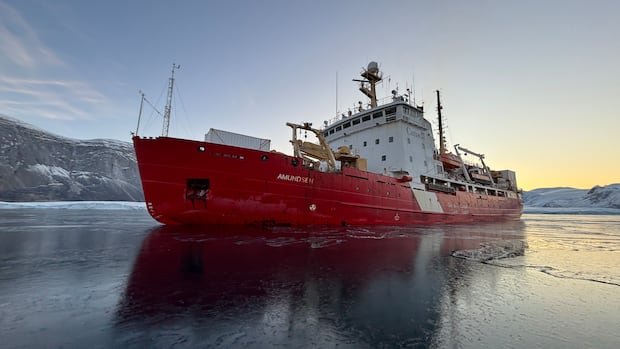


A Canadian research icebreaker navigated through the waters surrounding the Queen Elizabeth Islands and western Tuvaijuittuq in Canada’s High Arctic, a region historically inaccessible due to thick sea ice. This unprecedented voyage was made possible by the melting sea ice, allowing scientists to explore these passageways for the first time.
During a four-week cruise aboard the CCGS Amundsen in early September, researchers from Fisheries and Oceans Canada (DFO) and the University of Manitoba conducted a comprehensive study of Arctic sea ice. The expedition marked the initial oceanographic research mission to reach this area of the Canadian Archipelago.
David Babb, a research associate at the University of Manitoba, highlighted the changing ice dynamics, noting a shift towards more seasonal ice and less multi-year ice. The rapid warming of the Arctic, which is reportedly occurring four times faster than the global average, has raised concerns about the imminent disappearance of sea ice in the region.
The diminished sea ice observed during the expedition serves as a stark indicator of climate change impacts. Despite challenges in finding thick ice, the researchers discovered areas of deteriorated and heavily melted sea ice, signaling the ongoing transformation of the Arctic environment.
The research team’s engagement with local communities, such as the science day at Resolute Bay’s Qarmartalik School, aimed to share insights and exchange knowledge about the changing Arctic ecosystem. Residents, including Grade 11 student Kupaaq Idlout, gained valuable information about ocean conditions, highlighting the importance of community involvement in monitoring ice thickness and environmental changes.
As scientists continue to investigate the Arctic’s evolving landscape, the collaboration between researchers and community members remains crucial in understanding and adapting to the shifting dynamics of the region.