
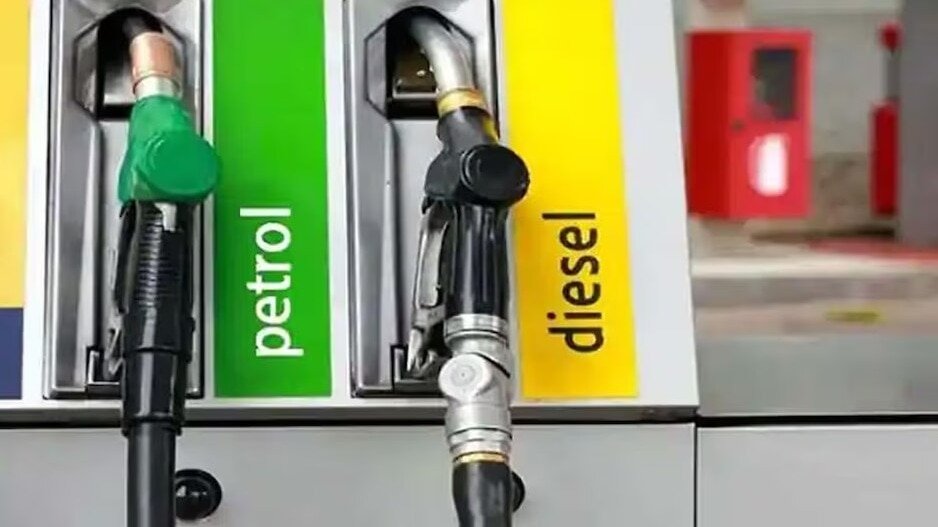

Global crude oil prices climbed above $100 per barrel on Thursday, surpassing a significant threshold that could exert new pressure on the stagnant petrol and diesel prices in India. Currently, there have been no alterations at petrol stations. However, if the elevated crude oil prices persist, experts suggest that the capacity to shield consumers might diminish rapidly.
This development has sparked inquiries among households, commuters, and businesses about the potential timing of a petrol price increase in India. The concern stems from India’s heavy reliance on imported crude oil, meaning that when global oil prices surge and sustain at high levels, the additional costs must eventually be borne by either oil companies, the government, or consumers.
Addressing the speculation on an imminent petrol price surge, it is clarified that a sudden surge in crude prices does not necessarily translate to an immediate hike in petrol prices. Oil companies typically leverage existing inventory, refining advantages, and internal reserves to absorb short-term fluctuations. However, if crude prices hover around or above $100 for an extended period, the pressure could intensify.
Manoranjan Sharma, Chief Economist at Infomerics Ratings, expressed that with crude nearing $100 per barrel, the window for sustainability could rapidly diminish. Sustained losses exceeding Rs 3 to Rs 4 per litre may become challenging to absorb without resorting to fuel price increases or government assistance.
Currently, the primary burden of maintaining stable prices appears to rest on oil marketing companies. At crude levels around $95 per barrel, Indian oil marketing firms are reportedly absorbing daily losses totaling approximately Rs 1,600 crore (Rs 48,000 crore monthly). The depletion of profit buffers poses a challenge to sustaining the current pricing strategy without potential adjustments in the near future.
The timeline for potential fuel price hikes hinges on the duration of elevated crude prices. Puneet Singhania, Director at Master Capital Services Limited, emphasized that the real challenge emerges when crude prices remain above $100, leading to profit margins being squeezed and cash flows constricted. While brief spikes may be manageable, prolonged periods of high prices could pose difficulties.
Despite the absence of immediate indications of a petrol or diesel price increase, the scenario may evolve if crude prices remain elevated. Policymakers and oil companies may confront familiar decisions, such as gradual fuel price adjustments, tax reductions to alleviate pressure, or temporary absorption of losses by oil marketing companies.
Manas Majumdar, Partner and Oil & Gas Sector Leader at PwC India, warned that the accumulated buffers of Indian oil companies could erode within the next three to four months without fiscal intervention or adjustments in retail prices. Although immediate price hikes are not imminent, they are plausible if crude oil prices stay elevated, particularly above $90 per barrel. The likelihood of price hikes escalates further if crude prices persist above $100, potentially leading to steeper increases.
In conclusion, while immediate price hikes are not on the horizon, the sustained elevation of crude oil prices, especially above $90 per barrel, may pave the way for future adjustments.