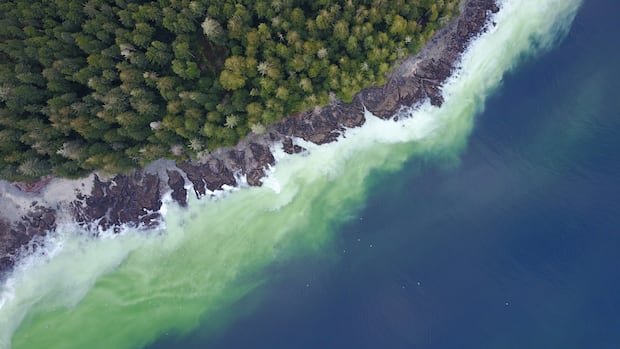


Ryan Cutler observed the ocean’s foamy appearance from his residence near Salmon Beach on the western side of Vancouver Island last week, signaling the commencement of the herring spawn. Cutler described the event as a truly magnificent time to witness. Utilizing his drone, he captured the distinctive milky blue-green water, a clear indication of the herring’s reproductive gathering in the shallow coastal bays.
The herring spawn is a significant period for Vancouver Island and the South Coast, symbolizing the onset of spring and a crucial time for coastal First Nations to gather food. Additionally, it serves as a vital phase for marine conservationists to monitor the declining numbers of herring due to historical overfishing.
Herring, as a keystone species, congregate in large numbers for reproduction. Females deposit eggs on kelp and eelgrass, while males release milt, resulting in the water’s milky appearance. Cutler noted the visible signs of staging, with herring congregating and preparing to spawn for weeks before the event.
The herring spawn attracts a plethora of wildlife, including sea lions, eagles, and humpback whales, creating a vibrant ecosystem. Nick Chowdhury, the president of the Island Marine Aquatic Working Group, emphasized the spawn’s importance for coastal First Nations, marking a significant shift in the seasons and offering opportunities for food gathering.
Salmon Beach witnessed one of the initial spawns on Vancouver Island, sparking excitement among observers to assess fish stocks and track the herring’s return to previously unoccupied areas. Tracking the spawn through the Island Marine Aquatic Working Group’s Facebook page aids in understanding the implications of conservation efforts and fishing quotas, highlighting the progress made in sustainable stock management practices.
Shirley Louie, a seasoned fisher from the Stz’uminus First Nation, delved into herring knowledge through a documentary project, showcasing traditional methods of catching and preparing the fish. Louie’s engagement with the Q’ul-lhanumutsun Aquatic Resources Society exemplifies the dedication of coastal Salish First Nations to aquatic resource management and the revival of traditional foods through practices like smoking and frying herring.