
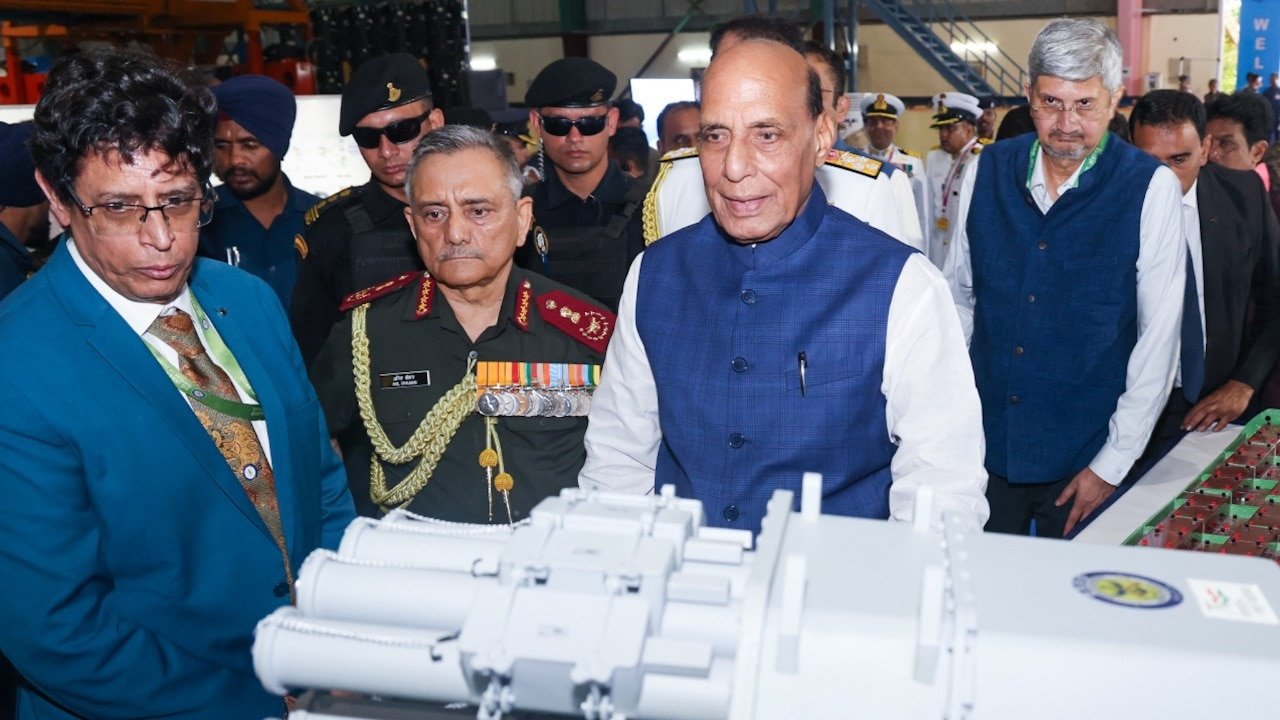

Rajnath Singh, India’s Defence Minister, initiated the construction of a cutting-edge Large Cavitation Tunnel (LCT) facility at the Naval Science and Technological Laboratory (NSTL) in Visakhapatnam on April 3, 2026. This development represents a significant advancement in bolstering India’s naval research and testing capabilities.
The project, overseen by the Defence Research and Development Organisation (DRDO), aims to enhance India’s self-reliance in hydrodynamic research and reduce reliance on foreign testing facilities. Singh emphasized that the facility will empower India to independently design, develop, and test equipment, systems, and sub-systems using domestic resources.
Singh highlighted the importance of this initiative in positioning India as a formidable naval force and a pioneer in defense technology. He stressed the shift from relying on foreign testing to utilizing domestic infrastructure for critical evaluations, particularly in submarine and ship design, propulsion systems, noise reduction, and stealth capabilities.
The Minister lauded the project as a manifestation of Prime Minister Narendra Modi’s vision for a self-reliant India, linking technological independence directly to national security. He credited diverse stakeholders, including domestic industries, academia, MSMEs, youth, and researchers, for propelling India towards self-sufficiency.
During his visit, Singh received updates on ongoing projects from DRDO officials and explored the Seakeeping and Manoeuvring Basin, where advanced underwater systems such as torpedoes, naval mines, decoys, and autonomous underwater vehicles (AUVs) were demonstrated.
A live display of man-portable AUVs showcased India’s advancements in autonomous maritime operations and next-generation underwater warfare technologies. Singh also assessed spin-off technologies developed by naval systems materials cluster labs post Operation Sindoor.
Singh praised NSTL’s contributions in torpedo systems, underwater mines, decoys, and AUVs, emphasizing the importance of swarm technology and lithium-ion battery advancements for future warfare readiness. He highlighted how robust technological systems enhance the confidence and operational efficiency of sailors at sea.
Key officials present at the event included Chief of Defence Staff Anil Chauhan, Chief of the Naval Staff Dinesh K Tripathi, Flag Officer Commander-in-Chief, Eastern Naval Command Sanjay Bhalla, and other senior personnel.
The Large Cavitation Tunnel project, considered a vital national asset, is being executed with international technical collaboration to combine global expertise with indigenous innovation. The facility, once operational, is expected to significantly enhance India’s shipbuilding industry by facilitating precise validation of hydrodynamic designs and propulsion systems for major naval platforms like destroyers and aircraft carriers.