

Warning: This article includes a graphic image of deceased individuals covered by a bloodstained sheet.
Last week, two NGO vehicles navigated through the destruction in northern Gaza to a spot near the Mediterranean Sea. A drone was deployed by a cameraman to capture footage of a nearby refugee camp.
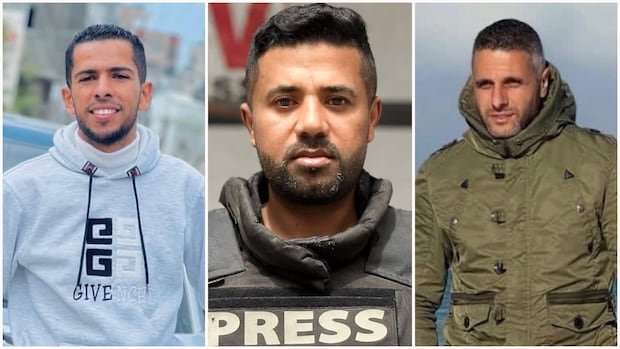
Shortly after, an Israeli airstrike hit the vehicle, as stated by witnesses, leaving it severely damaged. Tragically, three freelance photojournalists lost their lives, adding to the growing toll of Palestinian journalists who have perished in the conflict between Israel and Gaza.
The Committee to Protect Journalists describes the region as the deadliest for journalists in recent memory, surpassing any other conflict globally, according to Jodie Ginsberg from the organization.
In response to the recent fatalities, the Israeli military claimed it had targeted individuals deemed a threat to its forces, alleging they were operating a drone associated with Hamas, without providing evidence of such ties.
‘Journalists face imminent dangers’
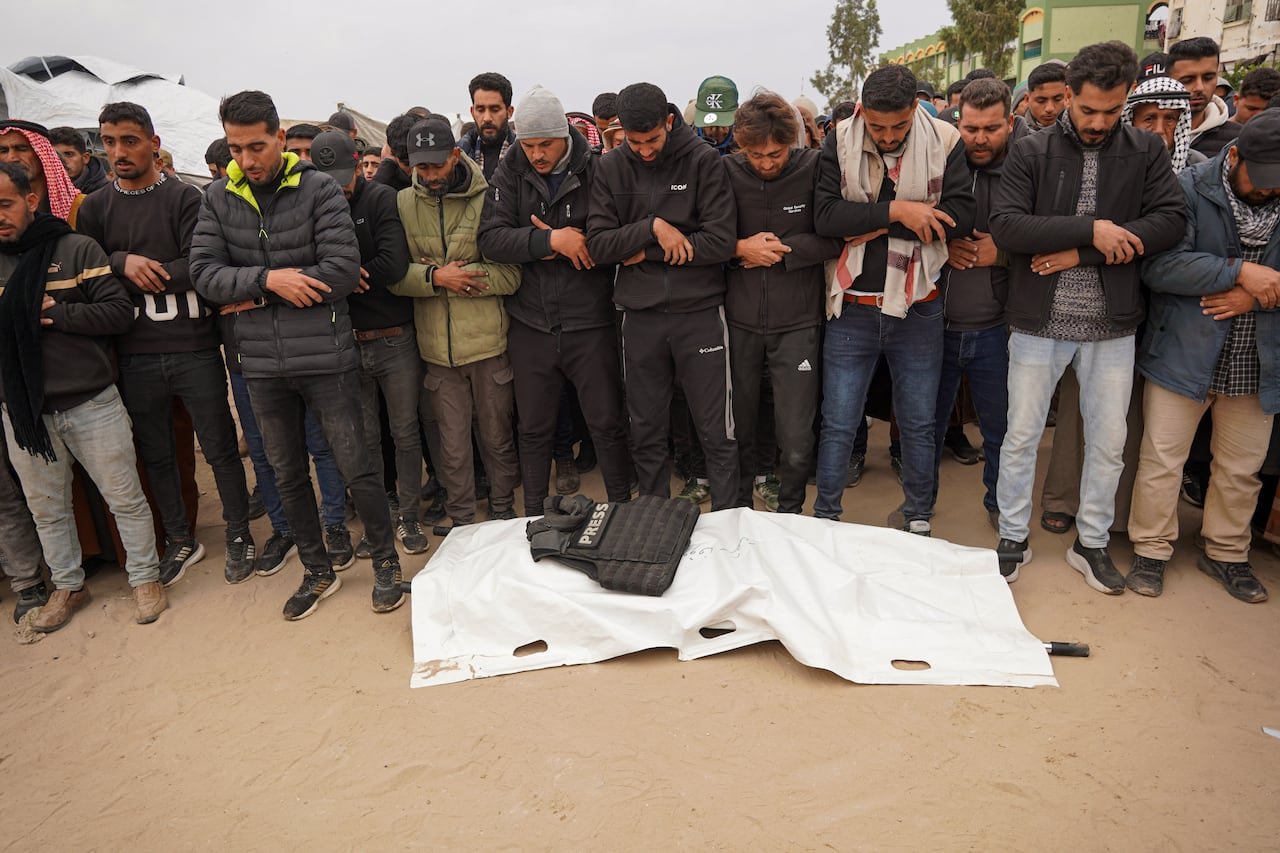
The funeral for the three journalists – Mohammed Salah Qashta, 36, Abdul Raouf Sha’at, 34, and Anas Ghneim, 25 – was a somber event familiar to many Palestinian reporters. They have mourned similar losses before, with each victim’s body draped in white and their bulletproof vest marked with “PRESS.”
Due to restrictions preventing most foreign media from entering Gaza, local freelance journalists, including those working for international outlets like CBC News, bear the brunt of the risks.
“The real dangers we face are unpredictable,” stated journalist Ahmed al-Batta, highlighting the constant risks they encounter.
Shams Shana’a, among the mourners, echoed his colleague’s sentiments.
“As a journalist, I fear going out to report,” he expressed. “There’s a constant fear of being targeted by the Israelis, who aim to conceal their actions from the world.”