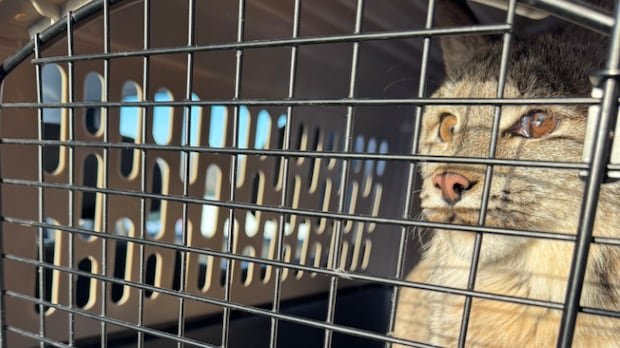


A rescued lynx from Manitoba has been diagnosed with a new condition after being taken to Ontario. Lumi the lynx was discovered near Swan River in late August, where she was found injured with an eye injury, possibly due to her mother being injured or killed. The Wildlife Haven Rehabilitation Centre in Ile des Chênes, located approximately 20 kilometers southeast of Winnipeg, took in the lynx. They determined that due to permanent eye damage, she could not be released back into the wild.
In October, Lumi’s condition worsened as she began experiencing severe seizures, posing a threat to her health and survival, according to Zoe Nakata, the executive director of Wildlife Haven. Despite their affection for Lumi, the staff had to medicate her to manage the seizures, although the cause remained unknown. Consequently, they decided to conduct an MRI and a comprehensive neurology assessment, a unique procedure for a lynx, as stated by Nakata.
Accompanied by Nakata and another staff member, Lumi was flown to Guelph, Ontario, at the end of January, where she underwent an MRI, a neurology assessment, and blood work with assistance from the National Wildlife Centre and the Ontario Veterinary College. The results revealed that Lumi most likely suffers from trauma-induced epilepsy, stemming from a brain injury coinciding with her eye injury.
Lumi will require lifelong medication to control the seizures, but the identified cause will enable the team to provide more effective care. Although lynx can live up to 14 years in the wild or 26 years in captivity, Lumi is planned to be relocated to Assiniboine Park Zoo eventually. The trip to Ontario, costing around $10,000, was funded by generous donors, with the daily cost of care averaging $50 per animal.
Following her return, Lumi has settled back into her enclosure, where staff have enhanced her environment with additional perches for enrichment, given her fondness for climbing and jumping. Despite the delay in her move to the zoo due to her seizures, the staff are ensuring her care plan is stable and that she is content and stress-free.