
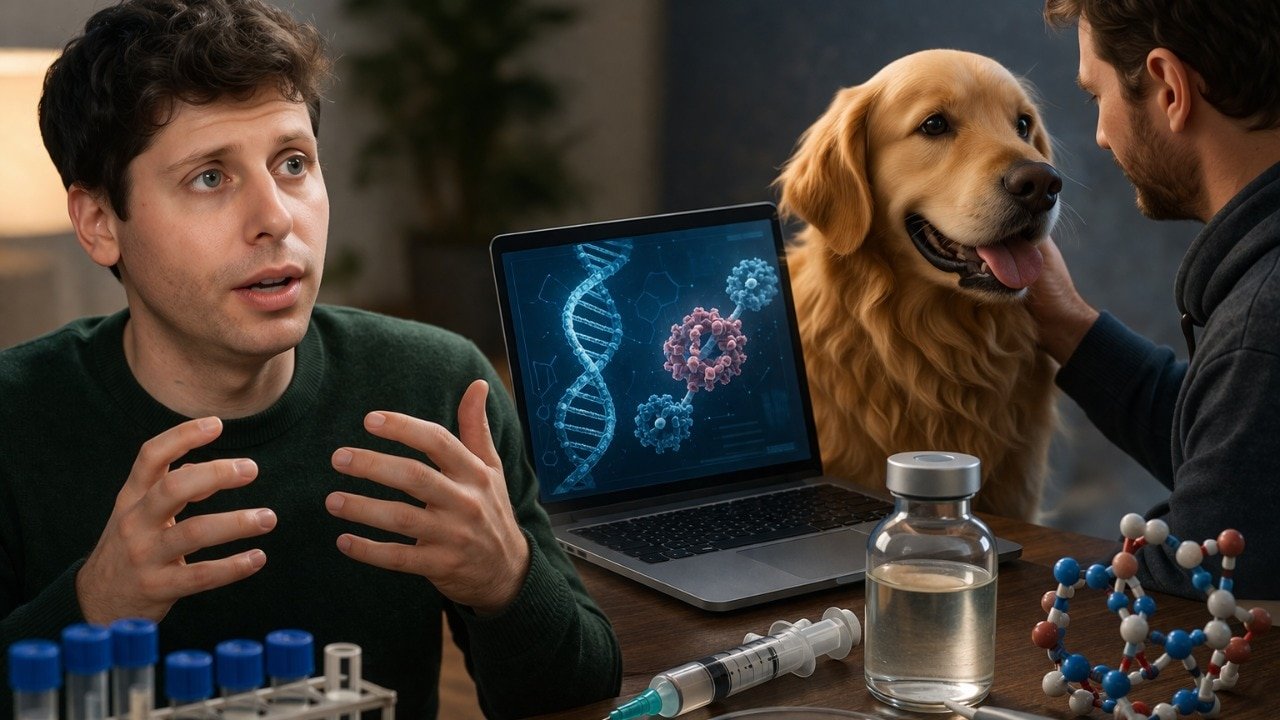


In a recent discussion on the future of artificial intelligence (AI), Sam Altman, the CEO of OpenAI, shared a remarkable story that highlights the potential of AI technology. Altman recounted an extraordinary instance where an individual, lacking a scientific or medical background, utilized ChatGPT to develop a personalized cancer vaccine for his pet dog. This anecdote underscores the increasing power of AI tools and their transformative impact on problem-solving approaches.
The conversation delved into broader concerns surrounding AI, such as its implications for employment, safety, and societal dynamics. However, it was this particular narrative that resonated the most. Altman described an encounter with a man who had journeyed from Australia after leveraging ChatGPT to craft a tailored mRNA vaccine for his dog, which was battling cancer.
Despite lacking expertise in medicine or research, the individual successfully navigated the vaccine creation process through ChatGPT. This involved deciphering the necessary genetic sequence and grasping the vaccine’s developmental intricacies.
Altman highlighted that the man didn’t merely theorize but actively engaged with academic professionals and researchers to actualize the project. By utilizing ChatGPT comprehensively, he accomplished a task that typically requires a full-fledged research institute, as detailed by Altman.
The outcome, as shared by Altman, was the successful treatment of the man’s dog. Subsequently, the individual is reportedly exploring avenues to extend this innovative approach to assist other pets grappling with similar conditions.
While this narrative showcases AI’s positive potential, it also raises significant ethical considerations. The podcast host pointed out the dual-use nature of AI tools, emphasizing that while they can be utilized for beneficial purposes like vaccine creation, there exists a risk of misuse for developing harmful biological agents. Altman acknowledged this concern, underscoring the imperative for robust safety measures within AI development. Despite efforts by companies like OpenAI to embed safeguards, the increasing accessibility of AI tools necessitates vigilance, as not all platforms may uphold stringent regulations.
Altman stressed the concept of “AI resilience,” advocating for systems that are not only equipped to prevent misuse but also capable of swift responses in case of emergencies. This entails rapid disease detection, accelerated treatment development, and enhanced global readiness.
– Ends