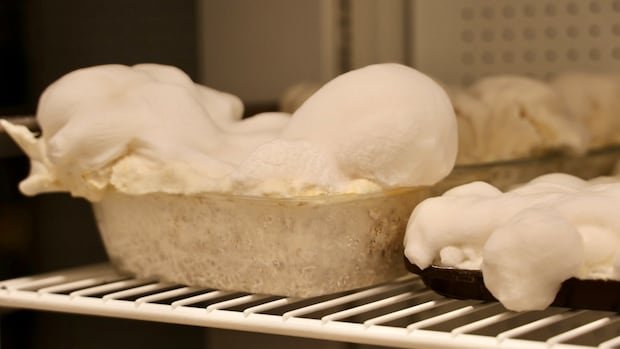


Deep within a dimly lit growth chamber in a research facility at Acadia University, a unique white substance emerges from a tray, resembling meringue or spray-foam insulation. This peculiar organism is mycelium, the root structure of a mushroom. Collaborating with an entrepreneur, researchers at Acadia are working on a process to utilize mycelium for producing a high-protein powder for the commercial food industry.
Katie McNeill, the visionary behind the project, noticed the wastage of agricultural food products in the Valley and envisioned their potential for mycelium cultivation. Teaming up with biologist Allison Walker at Acadia, they selected specific food waste from a facility in the Valley to cultivate mycelium. Through experiments with various mushroom species and environmental conditions, they optimized the growth process.
The mycelium is cultivated by mixing a mycelium liquid broth with the chosen food waste. After allowing the mycelium to grow, it is transferred to trays for further development. This unique process yields mycelium with a protein content of around 40%, comparable to hemp protein and slightly lower than pea or soy protein which require extensive processing.
Unlike some companies that create mycelium protein in large vats resulting in a processed sludge, McNeill’s company, Mycaro, aims to maintain a more natural product with minimal processing. By utilizing agricultural waste and employing energy-efficient indoor vertical farming techniques, Mycaro’s production process is sustainable and environmentally friendly.
The neutral taste of the mycelium protein appeals to consumers, particularly women seeking protein options that are not only nutritious but also gentle on the stomach. McNeill and Walker are focused on enhancing production yields and plan to set up a small commercial facility in the Valley by the end of 2026. The project, initially funded by Invest Nova Scotia, is expected to attract further investments in the near future.
With the goal of bringing their innovative product to the market, the team is optimistic about the future of sustainable high-protein food production using mycelium.