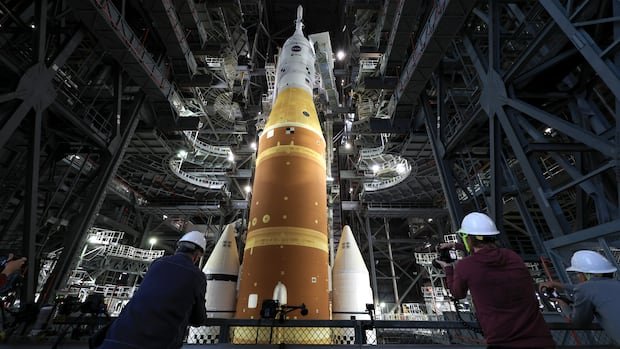


NASA’s Artemis II mission, originally set for a February 8 launch, faces a delay of at least one month due to a hydrogen leak discovered during tank fueling. The preceding Artemis mission also encountered delays linked to fuel leaks. The unique characteristics of liquid hydrogen and oxygen, the components of rocket fuel, make them prone to leaks despite their extremely low temperatures. Liquid hydrogen, with a boiling point of -253°C, and liquid oxygen, with a boiling point of -183°C, must be kept well below these temperatures to remain in liquid form.
To prevent the fuels from vaporizing, the equipment handling them must withstand the temperature disparity between the frigid liquids and the warm Florida air where the rockets launch. The Space Launch System (SLS) rocket’s core stage, covered in insulating foam, safeguards the cold fuel from the surrounding warmth. However, despite insulation efforts, these cryogenic fuels still create pressure and vaporize, leading to leaks. Hydrogen, being the smallest molecule, is adept at escaping through tiny cracks, making the rocket’s components vulnerable to leaks.
The recent delay was caused by a leak at the connector linking the launch tower hose to the rocket. Engineers aim to resolve this issue at the launch pad to avoid transporting the rocket back for repairs, potentially saving time and resources. NASA’s reliance on liquid hydrogen as fuel, despite its leak challenges, is rooted in its high thrust-to-weight ratio, beneficial for heavy lift vehicles. However, critics argue that the SLS rocket’s high costs and disposability pose sustainability concerns compared to reusable rockets by private companies. The future of the SLS rocket hinges on addressing hydrogen leaks while considering cost-effectiveness and job preservation for its contractors.