

Nvidia has introduced a cutting-edge chip designed to integrate advanced artificial intelligence (AI) capabilities into laptops and desktop computers, with upcoming models from well-known brands like Microsoft and Dell expected to be launched later this year. The company, based in Santa Clara, California, has achieved significant success in supplying high-performance chips for data centers to meet the increasing global demand for AI. Nvidia is now looking to broaden its reach in AI systems and products.
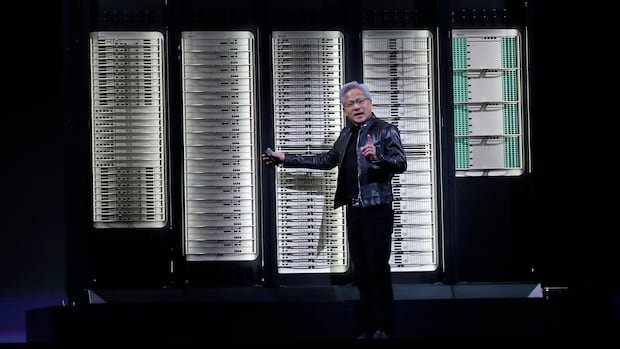
During the annual Nvidia GTC event in Taipei, Jensen Huang, the CEO and founder of Nvidia, revealed the new RTX Spark superchip that combines CPU and GPU functionalities to power upcoming Windows laptops and desktops. These devices, termed “AI personal computers,” are slated to debut this fall, aiming to redefine the PC experience for creation and gaming.
Nvidia, currently the world’s most valuable company surpassing tech giants like Apple, Google’s parent Alphabet, and Microsoft, envisions a future where AI agents play a central role in PC interactions. The company’s move to introduce AI-powered PCs is a response to the growing demand for personal AI assistants, providing users with enhanced capabilities and options.
Microsoft, in a separate statement, highlighted that PCs featuring Nvidia’s RTX superchips will be capable of supporting advanced AI models and complex workloads, enabling local AI agent operations. This innovation signifies a significant shift in the PC landscape, according to industry experts like Lian Jye Su from Omdia, offering consumers more choices and improved functionalities.
Neil Shah, an analyst from Counterpoint Research, described Nvidia’s initiative as a game-changer that will shape the future of PCs over the next decade. The vision is to bring AI applications powered by agentic AI to every household, aiming to establish an “AI supercomputer” in each home.
Additionally, Nvidia’s CEO Huang announced the full production of the new Vera CPUs for data centers, expected to drive substantial growth fueled by the rise of AI agents. Early adopters of these CPUs include prominent entities like Anthropic, OpenAI, and SpaceXAI. Huang also introduced a humanoid robot reference design intended to serve as a blueprint for future research endeavors, particularly in the higher education sector.