
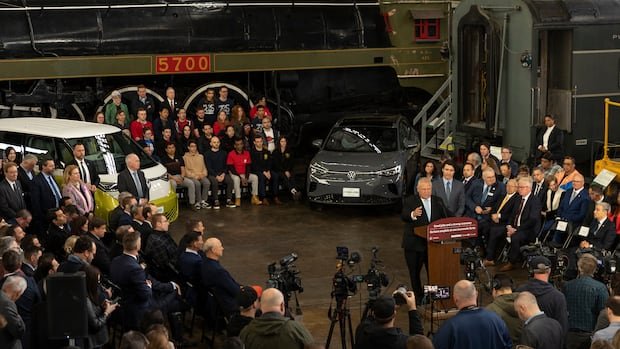

Ontario’s plan to establish a complete electric vehicle supply chain, previously a key focus for Premier Doug Ford, is facing setbacks as manufacturers delay or scrap projects. The government is now exploring alternative options to sustain the initiative.
Ford and the federal government had secured agreements to introduce three electric vehicle battery plants in Ontario, with investments totaling billions of dollars. The aim was to incorporate these batteries into electric vehicles manufactured in the province, using parts sourced locally and minerals extracted and processed within Ontario.
However, several obstacles have emerged since the initial proposal. Honda postponed the construction of an EV battery plant and the assembly of electric vehicles in Alliston citing reduced demand. Umicore deferred its plans for a cathode plant in eastern Ontario, while General Motors halted production of its BrightDrop electric delivery van in Ingersoll. Ford also delayed the production of electric vehicles in Oakville in favor of gas-powered pickup trucks from its F-Series line.
The Ontario auto industry is facing additional challenges due to a recent trade deal between Canada and China, which will eliminate nearly all tariffs on Chinese EVs in exchange for reduced tariffs on canola. While this move could potentially boost demand for affordable Chinese EVs and stimulate the market for green vehicles, it poses a threat to the domestic industry.
Despite these setbacks, Stellantis has taken a different approach by adjusting its operations at the NextStar Energy facility in Windsor. While the production of EV batteries has been postponed, the company has repurposed its manufacturing to focus on batteries for energy storage purposes.
According to NextStar CEO Danies Lee, there is a current demand for storage batteries and other applications such as AI-powered devices, with the expectation that electric vehicle demand will rebound in the future.
Economic Development Minister Vic Fedeli emphasized that Stellantis’ shift aligns with the government’s vision of establishing a comprehensive EV supply chain. The construction of the Asahi Kasei separator facility in the Niagara Region is progressing, supporting the local production of essential components.
Fedeli stressed that the government aims to attract companies to build in Ontario without resorting to market interventions. He emphasized job creation as the primary objective, regardless of the specific products being manufactured.
Industry experts anticipate a resurgence in electric vehicle demand both globally and in North America. Despite the current challenges, the long-term outlook remains positive, with increasing sales of EVs worldwide and the potential for battery storage technology to drive future growth.
In conclusion, while Ontario’s electric vehicle supply chain may have encountered hurdles, the focus on battery storage technology and the evolving market dynamics offer strategic opportunities for the province’s economic development and sustainability goals.