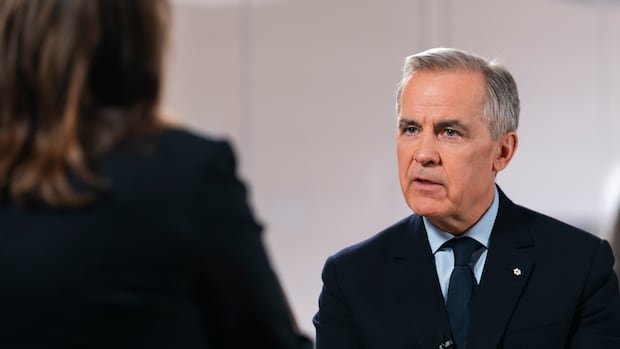


Prime Minister Mark Carney has emphasized the need for more investments in clean energy and technology in Canada, criticizing the current regulatory environment as overly burdensome and lacking in effective action. In an interview with CBC News, Carney expressed his concern about the gap between regulations and tangible outcomes, stressing the importance of driving real progress in addressing environmental issues.
Carney, who established a global banking group dedicated to combating climate change, has been questioned about his environmental stance following a recent agreement with Alberta that could facilitate a new oil pipeline to British Columbia’s northwest coast. This agreement also involved the suspension of proposed federal oil and gas emissions caps and Alberta’s obligations under federal clean electricity regulations, pivotal components of former Prime Minister Justin Trudeau’s climate strategy.
The prime minister acknowledged that existing policies were insufficient to meet Canada’s 2030 climate targets, as revealed by data from Environment and Climate Change Canada. Carney advocated for initiatives such as carbon capture and storage, emphasized in the Alberta agreement, and the development of a nuclear power generation strategy by Alberta in collaboration with the federal government.
Despite facing criticism and the resignation of former Environment Minister Steven Guilbeault from his cabinet over the Alberta agreement, Carney maintained that adjustments were made to address concerns raised. While specifics of these modifications were not disclosed, Carney affirmed Alberta’s acceptance of the changes.
Carney defended his support for a pipeline, contingent on the implementation of carbon capture technology and backing from key stakeholders like First Nations, British Columbia, and Alberta. He underscored the holistic nature of the agreement, emphasizing that all components must be fulfilled for the pipeline project to proceed.
In a parliamentary motion aimed at gauging support for an oil pipeline, Carney stressed the importance of considering the full context of the Alberta agreement, including environmental commitments beyond the pipeline itself. The motion, which excluded certain environmental provisions agreed upon with Alberta, was defeated, with Carney emphasizing the comprehensive nature of the deal.
Looking ahead, Alberta officials aim to commence pipeline construction by 2029. Carney reiterated the interconnectedness of the various elements within the agreement, emphasizing the need to fulfill all aspects for the project to move forward successfully.