
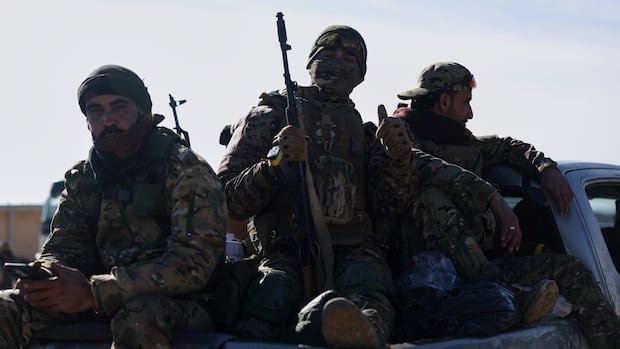


Syria’s government has accused the Kurdish-led Syrian Democratic Forces (SDF) of carrying out attacks that resulted in the deaths of 11 soldiers on Wednesday. However, the SDF has refuted some crucial aspects of the claim, asserting that at least one fatal explosion was due to Syrian troops moving explosives.
These incidents have jeopardized a four-day ceasefire that was declared on Tuesday following days of conflict in northeast Syria. The situation arose as Damascus pushed the SDF to agree to a plan for their integration into the central state.
According to Syria’s government, seven soldiers were killed in a drone strike by the SDF while they were securing a captured military base that contained explosives, labeling it a perilous escalation. On the other hand, the SDF denied any involvement in the strike.
The SDF, once a primary ally of the U.S. in Syria, stated that the blast occurred while Syrian soldiers were relocating explosives and accused the Syrian army of violating the ceasefire by launching attacks in multiple locations.
Later on Wednesday, Damascus reported that a total of 11 soldiers had been killed and 25 wounded in SDF attacks on army positions on the first day post the ceasefire announcement. The SDF did not respond directly to this wider accusation.
Following significant gains against the SDF, the government announced an agreement on Tuesday with the Kurdish group for a four-day ceasefire, during which the SDF was expected to integrate into the central state. Failure to comply would result in an assault on the last two main cities under SDF control.
The advancement of the government against the SDF has raised doubts about years of Kurdish autonomy in northeast Syria. This situation could impact Syria’s relationships with the United States and Turkey, as well as the fate of numerous detained Islamist militants.
Turkish President Recep Tayyip Erdogan, a key ally of Syrian President Ahmed al-Sharaa, emphasized that the SDF, considered a terrorist group by Turkey, must disarm and disband to prevent further violence.
The U.S., which previously supported the SDF in combating Islamic State militants in Syria, did not interfere with the offensive and encouraged the group to accept the government’s terms. The U.S. cited the expiration of reasons for their alliance with the SDF but expressed concerns about the fate of detained Islamic State militants and associated civilians.
On Wednesday, the U.S. military disclosed that a mission was underway in Syria to transfer Islamic State prisoners to Iraq. The SDF confirmed its acceptance of the ceasefire and pledged not to engage in military actions unless provoked.
Mazloum Abdi, the leader of the SDF, reiterated the importance of protecting Kurdish-majority areas as a crucial priority. The region in northeast Syria, positioned between the Turkish and Iraqi borders, is home to both Arab and Kurdish populations and holds the majority of Syria’s energy resources.
As of Wednesday, Syrian troops remained stationed outside the last major Kurdish-held cities in northeast Syria. Reporters observed significant reinforcements brought in by the government forces, including convoys of tanks and military vehicles, as well as buses carrying fighters.
The troops halted their advance following Sharaa’s latest ceasefire announcement and awaited further instructions based on the SDF’s response to the proposal. The strategic landscape in Syria has shifted dramatically over the past 13 months, particularly since rebels, led by former al-Qaeda commander Sharaa, ousted Iran-backed President Bashar al-Assad in a swift offensive.
The SDF, which had clashed with Sharaa’s rebels during the civil war, controlled a significant portion of Syria and maintained autonomous governance distinct from Damascus. The U.S. supported the SDF in repelling attacks by Assad and his allies, but Sharaa’s improved relations with Washington altered the dynamics between the U.S. and Damascus.
Turkey, viewing the SDF as linked to the Kurdistan Workers’ Party (PKK), an insurgent group within Turkey, had a military presence in northern Syria to support rebel factions. Ankara is currently engaged in peace talks with the PKK, viewing the end of SDF control in Syria as a crucial component of the negotiations.
Erdogan welcomed the ceasefire in Syria during a parliamentary address, expressing hope that the complete integration of the SDF into the Syrian state would usher in a new era for the country. Erdogan and Trump discussed the Syrian situation in a recent phone call, focusing on the status of prisoners in Syrian jails and the ongoing fight against Islamic State.