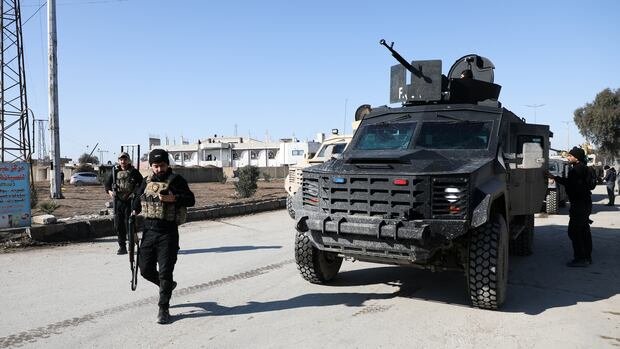


Syria declared a ceasefire with Kurdish forces on Tuesday, offering them four days to negotiate integration into the central state. The United States, their main ally, encouraged the Kurds to accept this proposal following recent rapid government advances and the apparent withdrawal of U.S. support for the Syrian Democratic Forces (SDF) holding territory in the northeast. This shift marks a significant change in control since rebels ousted Bashar al-Assad 13 months ago.
U.S. envoy Tom Barrack described the integration offer, including citizenship rights, cultural protections, and political participation, as a major opportunity for the Kurds. He stated that the original purpose of the SDF, supported by the U.S. in combating the Islamic State, has largely concluded, and the U.S. does not intend to maintain a long-term presence in Syria.
The U.S. expressed “grave concern” and called for all parties to negotiate in good faith as they monitor developments in Syria. They urged maximum restraint, avoidance of actions escalating tensions, and prioritization of protecting civilians across all minority groups.
The SDF accepted a ceasefire with the Syrian government, agreeing not to engage in military action unless provoked. A Syrian government statement announced a ceasefire for four days, during which the SDF must devise an integration plan for Hasakah province or risk state forces entering two SDF-controlled cities.
Northeast Syria, bordering Turkey and Iraq, is inhabited by Kurds and Arabs and was previously overrun by Islamic State fighters, later pushed back by the SDF with U.S.-led coalition support. The Kurdish YPG force, a key component of the SDF, has raised concerns for Turkey, viewing it as linked to the PKK, which waged an insurgency in Turkey.
Since Assad’s ousting in December 2024, Syria has been led by former rebel leader Ahmed al-Sharaa, an ally of Turkey. Northeast Syria is a sensitive area for Ankara, and its international importance is heightened by SDF-guarded facilities holding Islamic State militants and associated civilians.
On Monday, around 200 low-level Islamic State fighters escaped Shaddadi prison in northeast Syria when the SDF departed, with many recaptured by Syrian government forces. The Syrian Interior Ministry reported 120 escapees, with 81 apprehended. The SDF also withdrew from al-Hol camp, home to jihadist group-affiliated civilians near the Iraqi border.
Syrian military sources noted government troop advances in eastern Hasakah province and near Kobani on the Turkish border. The SDF retains control of Hasakah City and Qamishli, with the government refraining from entering these cities during the four-day integration plan outline period.
Tensions between the SDF and Damascus escalated this month due to a deadlock over the group’s fate and territory. Following agreements for SDF withdrawal from Raqqa and Deir al-Zor, government forces entered Hasakah province. Reports indicated a tense meeting between SDF commander Mazloum Abdi and Sharaa, with U.S. involvement in mediating between the parties.