

The administrative bodies of Pakistan’s capital cities, Islamabad and Rawalpindi, have instituted extensive restrictions on both public and commercial transport until further notice, as the nation prepares for a potential second round of critical US-Iran discussions. These measures in the capital and its neighboring city arise despite the absence of confirmed dates for the negotiations. Confusion is further compounded by varying reports suggesting that the talks may occur in Islamabad.
A source from the Pakistani government informed Turkish news agency Anadolu that US and Iranian delegations are expected to conduct a second round of talks, possibly including technical discussions, in Pakistan on Monday. However, Iranian Deputy Foreign Minister Saeed Khatibzadeh stated on Saturday that no date has been established for another round of in-person discussions with the United States.
On Sunday evening, US President Donald Trump announced that American representatives were en route to Islamabad for negotiations. “My representatives are going to Islamabad, Pakistan. They will arrive there tomorrow evening for negotiations,” he stated.
Earlier that same day, Trump had mentioned to the New York Post that Jared Kushner, Special Envoy Steve Witkoff, and a seasoned negotiator from past Middle East discussions would be traveling to Pakistan, arriving on Monday night.
Despite this, neither Pakistan nor Iran has verified the occurrence of the talks.
“All heavy and public transport in the city will be suspended until further notice. We request citizens to cooperate with security agencies. Thank you,” the District Commissioner of Islamabad posted on X.
Security measures have been heightened around the Serena Hotel in Islamabad, the venue where the initial US-Iran meetings occurred on April 11 and 12, according to reports from Reuters. However, these preparations are noted to be less intense than those observed during the earlier meetings.
The initial round of US-Iran discussions represented the highest-level direct negotiations between the two nations since the 1979 Islamic Revolution, though they concluded without any agreement. Pakistan’s current hybrid regime, under the leadership of its de facto ruler Asim Munir, is once again aiming to facilitate dialogue between the two parties. The Pakistani authorities have made extensive efforts to act as “mediators,” engaging in an intensive shuttle diplomacy. They now appear eager to achieve a breakthrough, despite the ongoing uncertainty regarding the timing and occurrence of the talks.
Meanwhile, officials in both Islamabad and Rawalpindi state that the restrictions are aimed at ensuring the safety of foreign delegations and maintaining strict control over movement in sensitive areas, as reported by AFP.
The context for these measures is a delicate diplomatic situation. The first round of discussions earlier this month concluded without agreement on critical matters such as Iran’s nuclear ambitions and regional security. Nonetheless, President Trump expressed optimism, stating that if a deal is reached in Islamabad, “I may go. They want me.”
TRANSPORT RESTRICTIONS IN PAKISTAN’S TWIN CITIES — ISLAMABAD, RAWALPINDI
Authorities in Islamabad and Rawalpindi have effectively curtailed long-distance passenger movement into these cities by shutting down major transport hubs. The Faizabad bus terminal, a crucial link between the capital region and the rest of the country, has been closed since late Saturday and is expected to remain shut until April 26, according to Riyadh-based Arab News.
All intercity buses and public transport vehicles have been prohibited from entering the Rawalpindi district, while services along the Motorway and Grand Trunk Road are restricted. Rent-a-car services and tourist buses have also been temporarily suspended, the report adds.
“All private, public, and goods transport in Rawalpindi is hereby suspended with immediate effect. Further updates will be provided,” the District Commissioner of Rawalpindi posted on X on Sunday.
District administrations have gone further by instructing transporters across the country not to issue tickets for travel to Islamabad or Rawalpindi until further notice. Although intra-city services, such as the metro bus, are operational at a limited capacity, they may face disruptions during VIP movements and security operations, as reported by Dawn.
A police spokesperson informed Dawn that these measures are directly related to the anticipated arrival of foreign delegations, noting that there is “no final decision yet” regarding a broader suspension of goods transport.
ENHANCED SECURITY IN PAKISTAN’S CAPITAL IN PREPARATION FOR US-IRAN TALKS
In tandem with the transport restrictions, authorities have implemented comprehensive security measures throughout the twin cities. Over 6,000 police officers from Islamabad, along with 900 from the Federal Constabulary, have been deployed. They are supported by Rangers, army units, and additional reserves from Punjab police, as reported by Arab News.
In Rawalpindi, more than 5,000 officers have been stationed, with over 350 special checkpoints set up to monitor critical entry and exit points, highways, and sensitive sites, including the Nur Khan Airbase used by foreign delegations.
Shops, markets, hotels, and even educational institutions are under orders to close during the expected presence of delegations. Entry and exit routes into high-security zones, particularly in Islamabad’s Red Zone, are under stringent control.
However, amid the preparations in Pakistan, uncertainty persists regarding the second round of talks. There is no clarity on whether they will occur on Monday, or at any time thereafter.
Iranian Deputy Foreign Minister Khatibzadeh, who stated that no date had been set for a new face-to-face round with the US, criticized Washington’s unwillingness to relinquish its demands, which Tehran has labeled “maximalist”.
US-IRAN TALKS IN A STATE OF UNCERTAINTY FOLLOWING FAILED FIRST ROUND IN ISLAMABAD
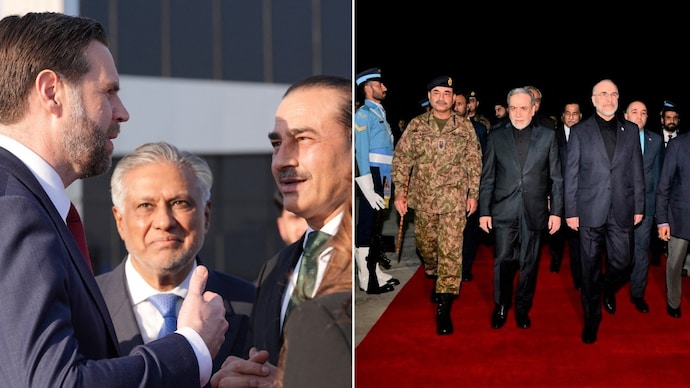
The restrictions in Islamabad and Rawalpindi arise amid doubts over whether a second round of US-Iran discussions will even take place. The first round, which was conducted in Islamabad on April 11 and 12, represented the highest-level direct engagement between the two nations in decades but concluded without a resolution.
The US delegation was led by Vice President JD Vance and included special envoys Steve Witkoff (Trump’s personal envoy for peace missions) and Jared Kushner (presidential adviser and Trump’s son-in-law). The full US delegation consisted of around 300 members, including notable officials like National Security Adviser Andrew Baker.
The Iranian side was led by Parliamentary Speaker Mohammad Bagher Ghalibaf and Foreign Minister Abbas Araghchi, and comprised approximately 70 members.
Key issues included Iran’s nuclear programme and broader regional security challenges. While both parties have shown a willingness to continue discussions, no timetable has been established.
Following the unsuccessful initial discussions, Pakistan embarked on a vigorous shuttle diplomacy initiative to rejuvenate negotiations between the US and Iran within its borders.
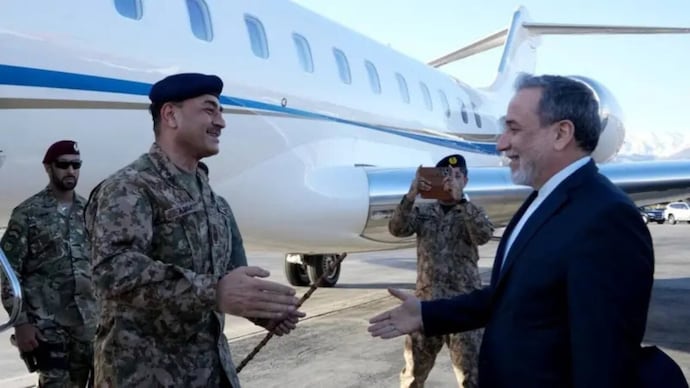
Asim Munir traveled to Tehran on April 15 and engaged in high-level discussions with Iranian leaders, including Foreign Minister Abbas Araghchi. A senior Iranian official informed Reuters that the visit was “effective in reducing differences in some areas” and had “increased hopes… for organizing a second round of discussions,” although nuclear matters remained unresolved.
Concurrently, Prime Minister Shehbaz Sharif made consecutive visits to Turkey and Qatar to garner regional support and maintain engagement from both parties.
In the meantime, President Trump indicated he might personally visit Islamabad if a peace agreement with Iran is finalized there, referring to the Pakistani capital as the prospective site for a historic ‘Islamabad Accord’, which has been welcomed by the hybrid regime in Iran. He has lauded Pakistan’s leadership, referring to Shehbaz Sharif and Army Chief Field Marshal Asim Munir as “fantastic” and “great” for their mediation efforts.
However, with just a day left before the potential talks on Monday, there remains a lack of confirmation and clarity regarding the progression of the plan, resulting in ongoing confusion.
On Sunday, Iran announced it was not prepared to commence a new round of face-to-face discussions with US officials, as conveyed by a senior Iranian official to the Associated Press. The official cited Washington’s unwillingness to relinquish its “maximalist” demands as the primary concern.
Deputy Foreign Minister Khatibzadeh also stated that Iran would not transfer its enriched uranium to the United States, refuting claims made by Trump.
“I can assure you that no enriched material will be sent to the United States,” Khatibzadeh told the Associated Press. “This is a non-starter, and while we are open to addressing our concerns, we will not accept proposals that are non-starters.”
Consequently, the Iranian position, expressed just a day before the potential talks were scheduled to take place in Pakistan, casts doubt on the likelihood of the second round of US-Iran discussions. Pakistani officials have also not provided any official confirmation regarding the matter. Nevertheless, authorities in both Islamabad and Rawalpindi have once again called for increased security measures in anticipation.
The extension of certain security protocols until April 26 indicates that Pakistan is preparing for a longer duration in case the talks are postponed from Monday to a later date next week.