
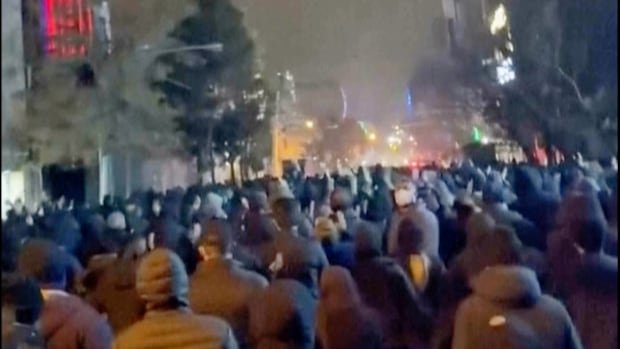

U.S. President Donald Trump mentioned that the United States could engage with Iranian officials and was exploring various responses, including military options, to address the recent violent suppression of protests in Iran. The ongoing protests present a significant challenge to the established clerical rule since the 1979 Islamic Revolution.
Iranian Foreign Minister Abbas Araqchi stated during a briefing with foreign ambassadors in Tehran that the country is prepared for both conflict and dialogue. Araqchi emphasized that the situation in Iran is currently under control following a surge in violence associated with the protests.
Communications between Araqchi and U.S. special envoy Steve Witkoff are ongoing, with additional channels open through Switzerland. President Trump has cautioned Iran’s leadership against attacking protesters, warning of potential U.S. military intervention.
According to the U.S.-based rights group HRANA, at least 490 protesters and 48 security personnel have been confirmed dead, with over 10,600 individuals reportedly detained. However, Iran has not provided an official death toll, and independent verification is challenging due to the ongoing internet blackout in the country.
Despite the widespread demonstrations, there is no apparent division within Iran’s Shia clerical leadership, military, or security apparatus. The protest movement lacks a unified leadership structure, contributing to its fragmented nature.
President Trump mentioned that Iran has expressed interest in negotiating its nuclear program, which had previously faced military actions from Israel and the U.S. In response to recent events, Iranian authorities have accused the U.S. and Israel of inciting unrest and have called for national solidarity through public rallies.
Plans to address the situation in Iran, including potential military strikes, cyber warfare, expanded sanctions, and support for anti-government factions, are reportedly being discussed by U.S. officials. However, the feasibility and risks associated with military actions, especially concerning civilian casualties, are being carefully evaluated.
Iran’s parliament speaker Mohammad Baqer Qalibaf issued a warning against any aggressive actions towards Iran, highlighting potential retaliatory measures targeting U.S. bases, Israeli territories, and ships. Despite such threats, Iran’s geopolitical influence has been diminished recently due to regional conflicts and internal challenges.
The protests initially sparked by economic grievances have evolved into broader anti-government sentiments, particularly against the Revolutionary Guards’ perceived economic dominance. Efforts to restore internet access in Iran are in progress, with discussions involving security considerations.
In Tehran, the ambassadors of several European countries were summoned to convey Iran’s request for their governments to cease support for the protesters. This development underscores the diplomatic tensions surrounding the ongoing protests in Iran.