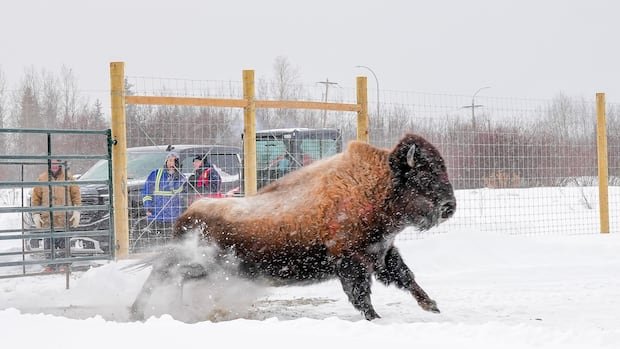


In northeastern Alberta, a Métis-operated ranch witnessed the return of wood bison after 120 years in a momentous event. The 20 bison, relocated from Elk Island National Park, sprinted into the boreal forest amid cheers and embraces from the community members. This marked the first bison stampede at the Willow Lake Métis Nation in over a century.
Elders and leaders from the community gathered to welcome the herd to their new home near Anzac, expressing joy and nostalgia for the return of the bison to their traditional lands. The ranch’s opening signifies a historic milestone for the Indigenous community and the animals, emphasizing the significance of food sustainability.
The arrival of the bison is part of a multi-year, $50-million food sustainability plan at Willow Lake. The herd will inhabit a section of the ranch, which will also feature hens, bees, greenhouses, and community gardens. The project aims to promote agriculture, tourism, and sovereignty for the community by influencing their environment positively.
Stella Lavallee, the president of Willow Lake Métis Nation, highlighted the importance of elders sharing their bison harvesting knowledge with younger generations. The initiative is expected to reduce food and living expenses in the region while reintroducing a sustainable lifestyle to the community.
With guidance from Cyrus Bison, the herd’s growth is anticipated, supported by the fertile environment near Gregoire Lake. The bison’s presence is expected to enhance the ecosystem by aerating the soil, reintroducing moisture, and providing nesting materials for birds and rodents. The initiative is seen as a step towards revitalizing the area and promoting food sovereignty.
Overall, the return of bison to the Métis land represents a significant cultural and environmental achievement, with long-term plans focusing on cultural activities, partnerships, and economic development within the community.