
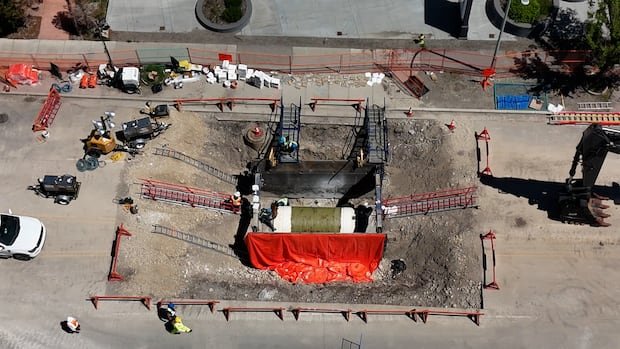


An independent panel has published a report regarding the 2024 rupture of the Bearspaw south feeder main, coinciding with a recent second break of the same main. While the latest rupture was not within their scope, the panel’s findings highlight numerous missed opportunities over the years to inspect the feeder main despite known risks of failure.
The report highlights that the Bearspaw south feeder main was identified as vulnerable following the 2004 rupture of the McKnight feeder main in northeast Calgary, which also utilized prestressed concrete cylinder pipe (PCCP). The age and design of the Bearspaw pipe, installed in the mid-1970s, were flagged as risk factors that were never addressed. Recommendations for pipe inspections in 2017, 2020, and 2022 were delayed or redirected due to other city priorities.
Infrastructure deficiencies are a concern in many Canadian cities, with over a quarter of water mains nationwide requiring repairs. Calgary faces heightened risk due to rapid population growth and the high maintenance costs associated with supporting a sprawling city.
The panel criticized Calgary’s high risk tolerance for critical infrastructure failures, likening it to a significant aviation incident caused by a faulty part that goes unaddressed. The urgent need for replacing the Bearspaw feeder main was emphasized, with ongoing construction of a new steel pipe to replace the aging concrete main by 2028.
Efforts to accelerate the replacement project were underscored after the recent break, with a call to expedite the installation of the new steel pipe by early 2027. While the swift action may disrupt residents and incur substantial costs, it is deemed necessary to enhance the city’s resilience against water main failures.
Regarding costs, detailed analysis was not provided, but the panel stressed the importance of prioritizing timely actions over cost considerations. Plans for a new water utility department, accountable executive leadership, and enhanced oversight mechanisms were recommended to prevent future failures and ensure better management of critical water infrastructure.
The report also highlighted the limitations of relying solely on acoustic monitoring to detect potential failures, calling for a more comprehensive approach that includes additional inspection methods like electromagnetic assessments and robotic camera inspections.
In conclusion, the panel’s recommendations stress the critical need for proactive measures to address aging infrastructure vulnerabilities and improve the overall resilience of Calgary’s water distribution system.