
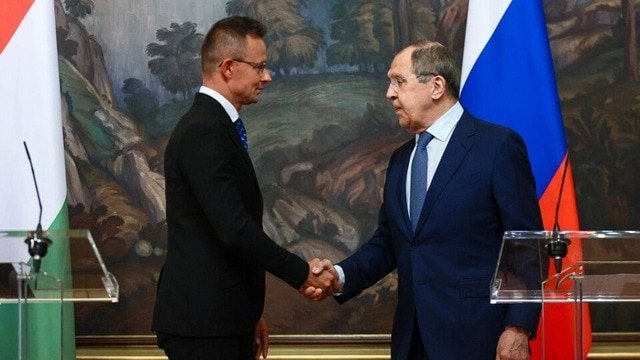


Leaked audio recordings suggest a possible collaboration between Hungary and Russia to undermine European Union (EU) sanctions. The alleged conversations between Hungarian Foreign Minister Peter Szijjarto and Russian Foreign Minister Sergei Lavrov reportedly discussed strategies to challenge the sanctions. The recordings, unveiled by investigative outlet Vsquare.org, are said to be from an August 2024 call, just before Hungary’s upcoming parliamentary elections on April 12. This revelation has sparked new concerns about Hungary’s position within the EU and its relationship with Moscow.
In the leaked audio, Lavrov is heard referencing a commitment from Szijjarto to assist in removing the sister of a Russian businessman from the EU sanctions list. Szijjarto purportedly mentioned that Hungary, in collaboration with Slovakia, intended to propose the individual’s delisting the following week, affirming, “We will do our best to secure her removal.”
Vsquare also mentioned another alleged call where Szijjarto reportedly updated Russia’s Deputy Energy Minister Pavel Sorokin on efforts to ease EU sanctions targeting Russia’s oil tanker fleet, as reported by Reuters. Although Szijjarto did not refute the conversation with Lavrov, he criticized the interception and disclosure of his talks, labeling it a “significant scandal” in a Facebook statement. He accused foreign intelligence agencies of leaking the data before the elections.
Hungarian Prime Minister Viktor Orban has initiated an inquiry into the purported wiretapping, amidst increased scrutiny of Hungary’s ties with Russia. Orban, who has maintained a close relationship with President Vladimir Putin despite the Ukrainian conflict, emphasized Hungary’s neutrality in the war while safeguarding its national interests.
This development coincides with Orban facing a formidable challenge in the upcoming elections, with the center-right opposition Tisza party leading in various independent polls. The situation is likely to raise concerns within the EU that Hungary might be promoting Russian interests within the bloc, potentially weakening support for Ukraine.
There has been no official response from Moscow regarding the reports. Slovakia’s Foreign Ministry declined to comment on the specifics, while Prime Minister Robert Fico noted that removing an individual from the EU sanctions list necessitates unanimous agreement from all 27 member states.