
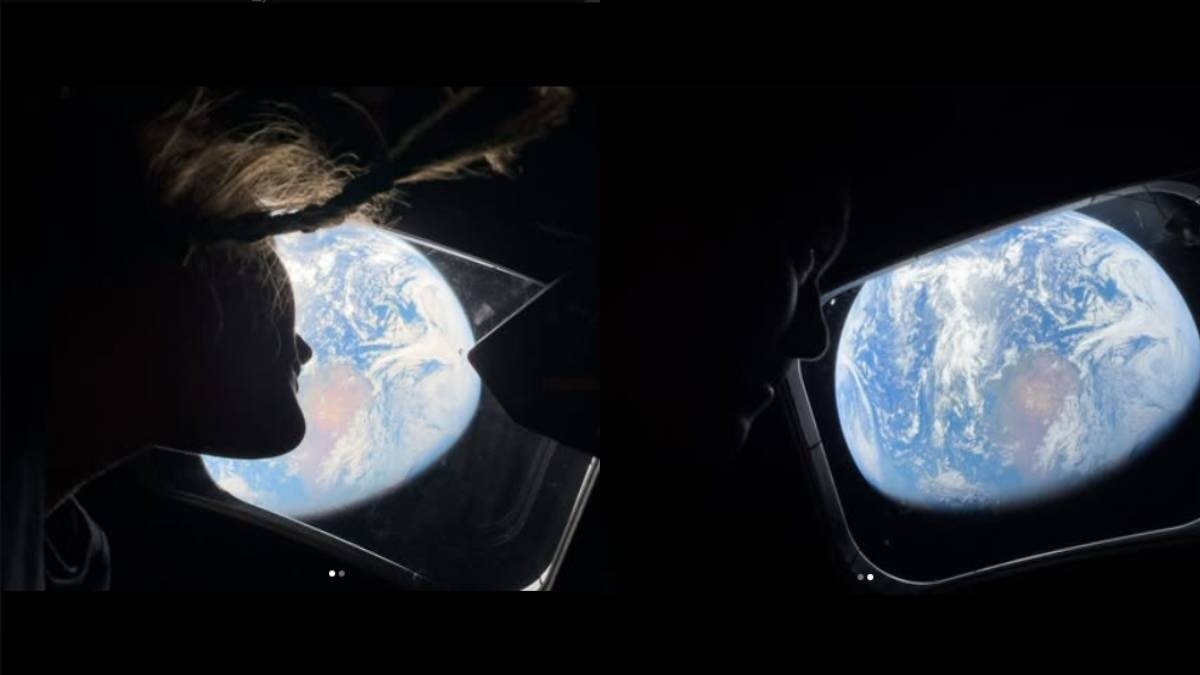

NASA recently unveiled an image that could be seen as a remarkable endorsement for the iPhone. As the Artemis II mission progresses with a flyby around the Moon, astronauts are sharing stunning Earth views. NASA’s Instagram account posted a picture of Earth taken from one of the windows of the Orion spacecraft en route to the Moon. The agency revealed that the captivating image was captured using an iPhone 17 Pro Max.
The revelation that these images were taken with an iPhone did not come as a shock to space enthusiasts, as earlier, a silver iPhone was spotted floating near a camera overlooking the cockpit of the Artemis II spacecraft. While it was anticipated that images from the iPhone would surface online, what surprised many was NASA’s decision to allow iPhones on the space mission.
Despite speculations that this move could be perceived as an iPhone marketing strategy, Apple has denied any involvement in NASA’s approval process. Nevertheless, this marks a significant milestone for Apple since NASA has stringent regulations regarding the equipment permitted in space missions. The process involves thorough hardware checks, hazard identification, and contingency planning in case of device malfunctions.
Traditionally, astronauts have relied on Nikon D5 and GoPro Hero 11 cameras for space photography. While smartphones have accompanied private missions to space previously, this is the first instance of NASA permitting iPhones for astronaut use during a space mission.
The use of iPhones on the mission has sparked curiosity about NASA’s rationale for approving them, considering the risks and lack of internet connectivity in space. iPhones are not intended for personal use by astronauts; rather, they are being utilized to document the mission and capture significant moments.
Astronauts aboard the Orion capsule have taken photos and videos using their iPhones through the spacecraft’s windows, including scenes of the rocket’s upper stage that propelled them into space. However, astronauts are prohibited from internet connectivity or Bluetooth usage.
NASA Administrator Jared Isaacman stated in a social media post in February, “We are giving our crews the tools to capture special moments for their families and share inspiring images and video with the world. Just as important, we challenged longstanding processes and qualified modern hardware for spaceflight on an expedited timeline.”
The iPhone 17 Pro Max is renowned for its camera capabilities, featuring 48MP sensors in all three rear lenses (Main, Ultra Wide, and Telephoto) with a default 24MP photo resolution. This setup allows users to capture high-resolution images, 4x and 8x optical zoom, and enhanced macro photography. Additionally, the device boasts an 18MP front camera for selfies and detailed zoom capabilities with a 200mm telephoto lens (8x) and a 48MP 100mm lens (4x).
– Ends