
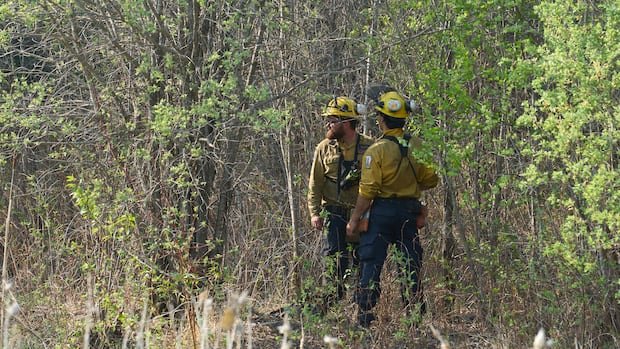

After a wildfire is extinguished, a dense smoke layer emerges from smoldering areas, contaminating the air with harmful substances that firefighters can inhale for prolonged periods. This phase, described by a former wildland firefighter in Manitoba, represents the peak of poor air quality, they emphasized.
“The aftermath of fighting wildfires can leave you blowing black soot from your nose at the end of the day,” stated the firefighter, who chose to remain anonymous due to concerns about potential repercussions.
Despite the risks, firefighters acknowledge that exposure to smoke is an inherent hazard of the job. With Canada experiencing longer and more intense wildfire seasons, experts caution that increased smoke exposure can have detrimental effects.
Christopher Pascoe, an associate professor at the University of Manitoba specializing in chronic respiratory diseases, emphasized the importance of minimizing smoke exposure. Manitoba has implemented measures such as providing disposable masks and training for firefighters to mitigate air pollution effects. However, protecting against wildfire smoke is not straightforward.
During grueling 15-hour shifts involving strenuous tasks like carrying heavy loads and enduring extreme heat, the ex-firefighter mentioned that air quality concerns were often secondary. While using a bandana for basic protection, the firefighter continued working despite the risks posed by wildfire smoke.
Pascoe highlighted the health risks associated with wildfire smoke, including immediate symptoms like respiratory issues and long-term consequences such as increased susceptibility to heart and lung diseases. Proper masks, such as respirators, offer effective filtration against dangerous particles present in wildfire smoke.
However, the Manitoba Government and General Employees’ Union raised concerns about the practicality of using bulky face coverings, citing potential hindrances in performing demanding firefighting duties. While disposable N95 masks are available to firefighters, Pascoe noted that these masks, while effective in filtering airborne particles, have limitations and may still allow hazardous gases to penetrate.
Innovative solutions are necessary to enhance respirators’ efficiency, Pascoe suggested. Manitoba’s Natural Resources Minister Ian Bushie emphasized the province’s commitment to protecting firefighters from wildfire smoke dangers while considering the physical challenges of wearing protective masks.
The province has offered disposable N95 masks to mitigate smoke exposure risks, but Pascoe cautioned that these masks might not provide sufficient filtration against pollutants. In addition to mask usage, Manitoba firefighters are trained to position themselves strategically to avoid heavy smoke exposure and employ various techniques to suppress fire while minimizing dust.
In British Columbia, alternate strategies like rotating crews in smoky areas and finding clean air spaces for rest are employed to reduce smoke exposure. Natasha Broznitsky from the BC Wildfire Service emphasized the importance of implementing multiple protective measures, acknowledging that respiratory protection is just one component of a comprehensive safety approach.
As wildfires become more severe, proactive measures must be taken to reduce firefighters’ exposure to harmful smoke. Drew Lichty, an occupational hygienist assisting the BC Wildfire Service, highlighted the significance of providing respirators as a crucial protection option amidst escalating wildfire risks.
While challenges exist in ensuring full compliance with safety protocols, offering diverse protective gear options can enhance firefighters’ safety. As wildfire seasons intensify, prioritizing firefighters’ health and safety remains paramount to mitigate the risks associated with smoke exposure.