
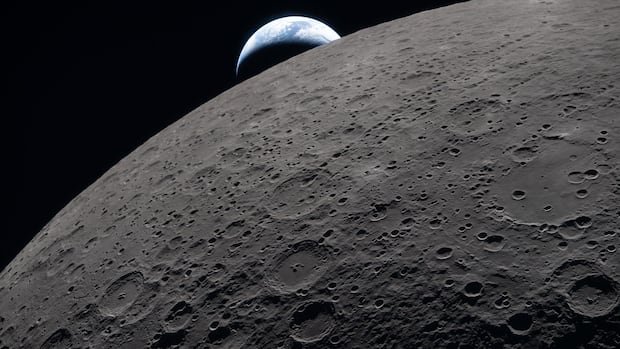

The Artemis II mission crew is on their way back home after an extraordinary lunar observation experience.
During the Artemis II mission, Canadian Space Agency astronaut Jeremy Hansen and NASA astronauts Reid Wiseman, Victor Glover, and Christina Koch set a new record by venturing farther from Earth than any previous human spaceflight.
While satellites have captured images of the moon’s far side since 1959, the Artemis II mission marked the first time humans directly witnessed certain far-side regions with their own eyes.
NASA’s Artemis II lunar science lead, Kelsey Young, expressed excitement about the opportunity for astronauts to visually inspect and describe lunar features firsthand.
Using both cameras and their unaided eyes, the astronauts spent five hours making detailed observations and descriptions of what they saw.
Among the notable features of interest was the Orientale basin, a geological formation believed to have originated 3.8 billion years ago. Hansen also highlighted color variations leading towards the Hertzsprung crater on the moon’s far side.
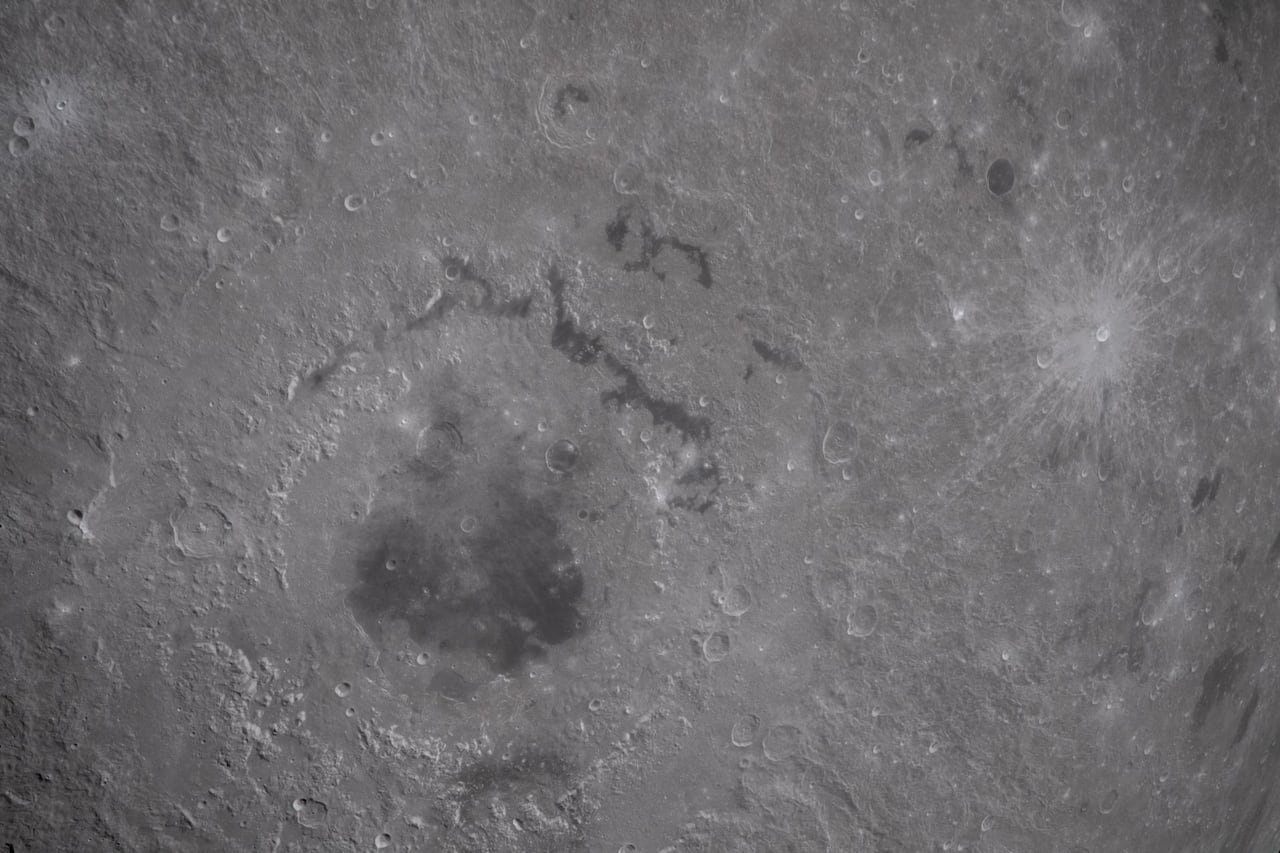
While it may seem unusual, the moon does exhibit colors, which can be discerned by adjusting saturation in photographs. The diverse hues stem from various minerals on the lunar surface.
However, the human eye is more sensitive than a camera and can perceive these subtle color differences without enhancement.
Ralph Chou, professor emeritus at the University of Waterloo’s school of optometry, and former president of the Royal Astronomical Society of Canada, noted that the human visual system surpasses electronic systems in discerning color variations.
Furthermore, human observers benefit from real-time, 3D views of lunar features, providing additional depth and context to their observations.
Meteoroids
During the lunar flyby, one intriguing observation was meteoroids colliding with the moon’s surface.
Unlike Earth, where most meteors burn up in the atmosphere, the moon’s lack of atmosphere allows meteoroids, remnants from the early solar system, to reach the lunar surface, resulting in its heavily cratered terrain.
Astronaut Victor Glover reported seeing several impact flashes during the flyby, highlighting the advantage of human observers in witnessing transient events that cameras may miss.
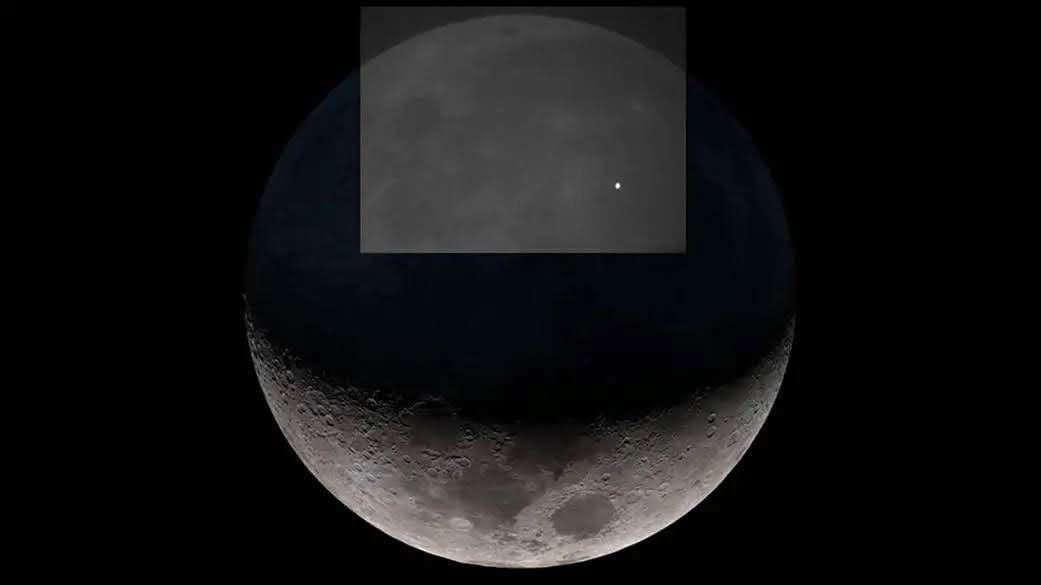
Notably, the European Space Agency plans to launch the Lunar Meteoroid Impacts Observer (LUMIO) mission to study meteoroid impacts on the moon’s far side.
While cameras are valuable for surface observations, combining visual and camera data enhances our understanding of lunar features and processes.
NASA’s chief exploration scientist, Jacob Bleacher, praised the crew’s descriptions of the lunar views during the flyby, highlighting the scientific value of their observations and subsequent data analysis.
Tag: rewrite-pending