
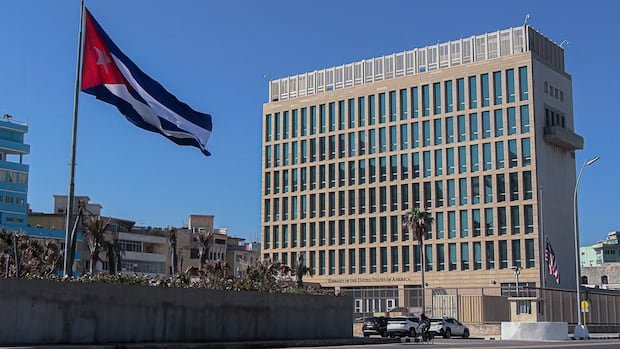

The U.S. government imposed financial sanctions on a large business group controlled by the Cuban military and a joint venture involving a Canadian mining company, as part of efforts to increase pressure on Cuba’s communist leadership by targeting foreign investment sources. Following the military operation to capture the leader of Venezuela, a close ally of Cuba, in January, President Trump indicated that Cuba would be the next focus and restricted most oil deliveries to the country, exacerbating power shortages on the island.
Last week, Trump signed an executive order expanding U.S. sanctions against Cuba, a move criticized by President Miguel Díaz-Canel as “coercive.” Under this order, U.S. Secretary of State Marco Rubio announced that the Trump administration was directing sanctions at Grupo de Administracion Empresarial S.A. (GAESA), a military conglomerate believed to control a significant portion of Cuba’s economy, and its Executive President Ania Guillermina Lastres Morera.
Rubio accused the Cuban government of facilitating intelligence activities for nations hostile to the U.S., a claim that Cuba denies. The sanctions also impacted Moa Nickel SA, a joint venture between Sherritt International Corp based in Toronto and Cuba’s state-owned nickel company, which mines nickel and cobalt, affecting a crucial revenue stream for Cuba.
The Trump administration has further limited U.S. travel and remittances to Cuba, discouraged regional allies from employing Cuban doctors, and pushed Sherritt to halt its operations in Cuba, effectively targeting all major sources of hard currency for the country. Sherritt announced the suspension of its joint venture activities in Cuba and initiated the repatriation of its expatriate employees from the country.
Cuba’s Foreign Ministry condemned the new U.S. sanctions as “ruthless economic aggression” and a violation of international law, urging the global community to address this escalation. The U.S. has persistently demanded economic reforms, property reparations, and democratic elections in Cuba, while Cuba defends its socialist system and attributes its economic challenges to decades of U.S. sanctions.
Senator Rubio recently met with military officials at the U.S. Southern Command in Florida, emphasizing the administration’s stance against Cuba’s communist regime. The sanctions were announced following Rubio’s discussions with Pope Leo at the Vatican, who advocated for dialogue amid escalating tensions between the U.S. and Cuba. UN experts criticized Trump’s fuel blockade on Cuba, warning of severe repercussions on the island nation’s development and human rights.