
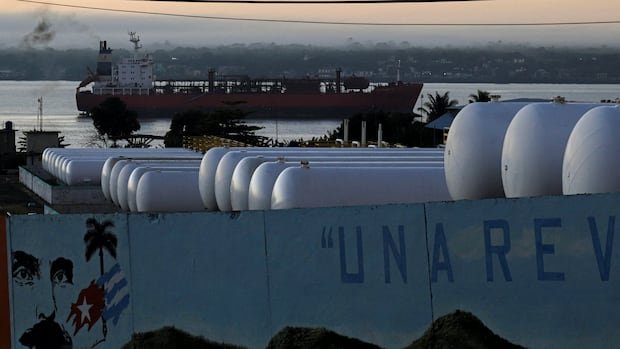

U.S. President Donald Trump declared on Sunday that Cuba will no longer receive Venezuelan oil or financial support, pressing the communist-run nation to negotiate with the United States. Venezuela, which is the main oil supplier to Cuba, has not shipped any oil to the Caribbean country since the capture of Venezuelan President Nicolás Maduro by U.S. forces on January 3. This occurred amidst a strict U.S. oil embargo on Venezuela, as shown by shipping data.
Concurrently, Caracas and Washington are advancing on a $2 billion deal to provide up to 50 million barrels of Venezuelan oil to the U.S. The proceeds from this deal will be held in U.S. Treasury-monitored accounts, representing a significant test of the evolving relationship between Trump and interim President Delcy Rodríguez.
In a post on his Truth Social platform, Trump emphasized, “THERE WILL BE NO MORE OIL OR MONEY GOING TO CUBA — ZERO! I strongly suggest they make a deal, BEFORE IT IS TOO LATE.” He pointed out Cuba’s historical reliance on substantial oil and financial support from Venezuela.
Although Trump did not specify the terms of the suggested deal, U.S. officials have recently toughened their stance towards Cuba. Cuban Foreign Affairs Minister Bruno Rodríguez defended Cuba’s right to import fuel from willing suppliers and denied receiving any compensation for security services provided to other nations.
Cuba heavily depends on imported crude and fuel, primarily sourced from Venezuela, as well as smaller quantities from Mexico, to power its generators and vehicles. While Venezuela’s supply of oil to Cuba has decreased due to operational challenges, it still accounts for a significant portion of Cuba’s oil needs. Mexico has emerged as an alternative oil supplier to Cuba, albeit on a smaller scale.
U.S. intelligence reports paint a challenging economic and political landscape for Cuba, but they do not align with Trump’s assertion that the island is on the brink of collapse. The CIA’s analysis indicates severe strains on key sectors of the Cuban economy, potentially complicating governance for President Miguel Diaz-Canel in the absence of oil imports and support from Venezuela.
Overall, the geopolitical dynamics between the U.S., Venezuela, and Cuba continue to evolve, shaping the future relationships and economic stability of these nations.