
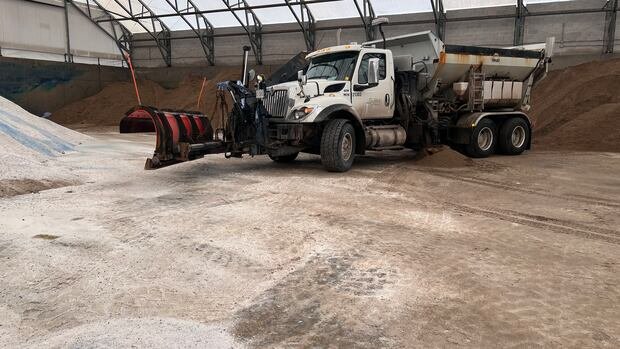

Ontario is currently grappling with a shortage of road salt as winter progresses, leading cities to adjust their strategies to manage dwindling supplies efficiently. The accelerated use of salt for de-icing roads and walkways, driven by an early winter onset and severe weather conditions, has heightened the demand. Guelph, for instance, has experienced an unusual spike in precipitation levels, with 104 millimetres of rain and 30 centimetres of snow in November and December, surpassing the average of 40 millimetres of rain and 10 centimetres of snow.
To cope with the salt shortage, municipalities are resorting to alternatives like sand or a sand-salt mixture to extend their limited salt reserves. The Goderich Salt Mine in Perth County, one of the world’s largest underground salt mines, is facing challenges in meeting the surging demand despite operating at full capacity with crews working round the clock. The mine’s vice-president of operations, Syed Kazmi, emphasized the strain caused by the concentrated demand over a short period.
Suppliers in the province are prioritizing municipalities for salt distribution due to the scarcity, prompting private contractors to seek supplies from other provinces like Quebec. The increased demand has led to higher costs, ultimately impacting consumers who end up paying more for salt. Meanwhile, southern Ontario has been experiencing wetter conditions this winter, with above-average snowfall reported in many areas. The warmer atmosphere attributed to climate change is seen as a contributing factor to the heightened moisture levels, leading to more impactful precipitation events.
Despite these challenges, municipalities are implementing salt conservation measures and training programs to manage the shortage effectively. While the road salt supply remains strained, efforts are being made to ensure sufficient reserves for future use.