
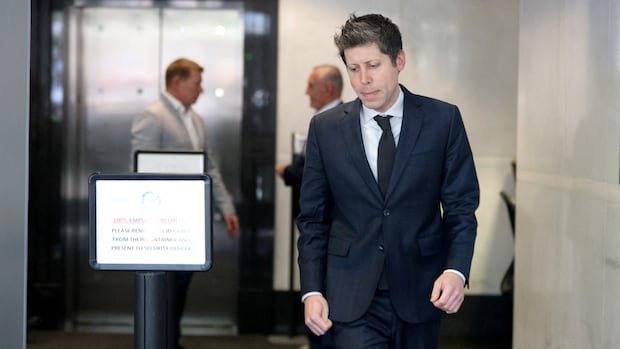

In a high-profile legal battle, Elon Musk, the wealthiest individual globally, has accused Sam Altman, the CEO of OpenAI, of unlawfully taking control of a charitable organization. Musk is pushing for Altman’s removal from the company’s leadership, alleging that OpenAI violated its founding agreement by transitioning into a for-profit entity. The trial concluded in Oakland, California, with the jury set to deliberate starting Monday, and the final ruling rests with U.S. District Judge Yvonne Gonzalez Rogers. Musk is seeking $150 billion in damages for the alleged breach.
Ebrahim Bagheri, an expert in responsible AI development at the University of Toronto, emphasized the significant impact the court’s decision could have on the AI market. Bagheri noted the unforeseen growth and profitability of generative AI technology since OpenAI’s inception, highlighting the potential ramifications of any restructuring within the company on the broader AI industry, including major players like Microsoft.
A series of prominent Silicon Valley figures testified during the trial, while protestors outside the courthouse expressed dissatisfaction with both sides. Catherine Bracy, the CEO of TechEquity, a tech industry-focused organization, suggested that the public’s sentiment towards the trial was one of universal disappointment, characterizing it as a situation where “everyone sucks.”
The legal dispute centers on OpenAI’s evolution from a non-profit organization, co-founded by Musk and Altman in 2015, to a for-profit venture reportedly valued at $1 trillion ahead of a potential public offering. Musk aims to revert OpenAI to its non-profit status and remove Greg Brockman, the company’s president. The case also involves allegations of financial impropriety, with Musk claiming that OpenAI coerced him into providing funds and received substantial investments from Microsoft and other parties.
The trial highlighted a dramatic falling out between Musk and Altman, as evidenced by a contentious email exchange in February 2023. Musk emphasized the existential importance of the case, citing concerns about the future of civilization. The legal proceedings also delved into the ethical implications of AI control and the potential risks associated with advanced AI technologies.
Altman’s leadership and integrity came under scrutiny during the trial, with allegations of dishonesty surfacing. Musk’s testimony painted OpenAI as a charitable endeavor, contrasting with its current for-profit status. The legal skirmish underscored the power dynamics and conflicts within the tech industry, particularly concerning the governance of advanced AI technologies.
The trial’s conclusion is anticipated early this week, with observers like Bracy highlighting the underlying power dynamics at play in the case. The outcome is seen as emblematic of the challenges posed by tech industry billionaires and the need for accountability measures within the sector.