
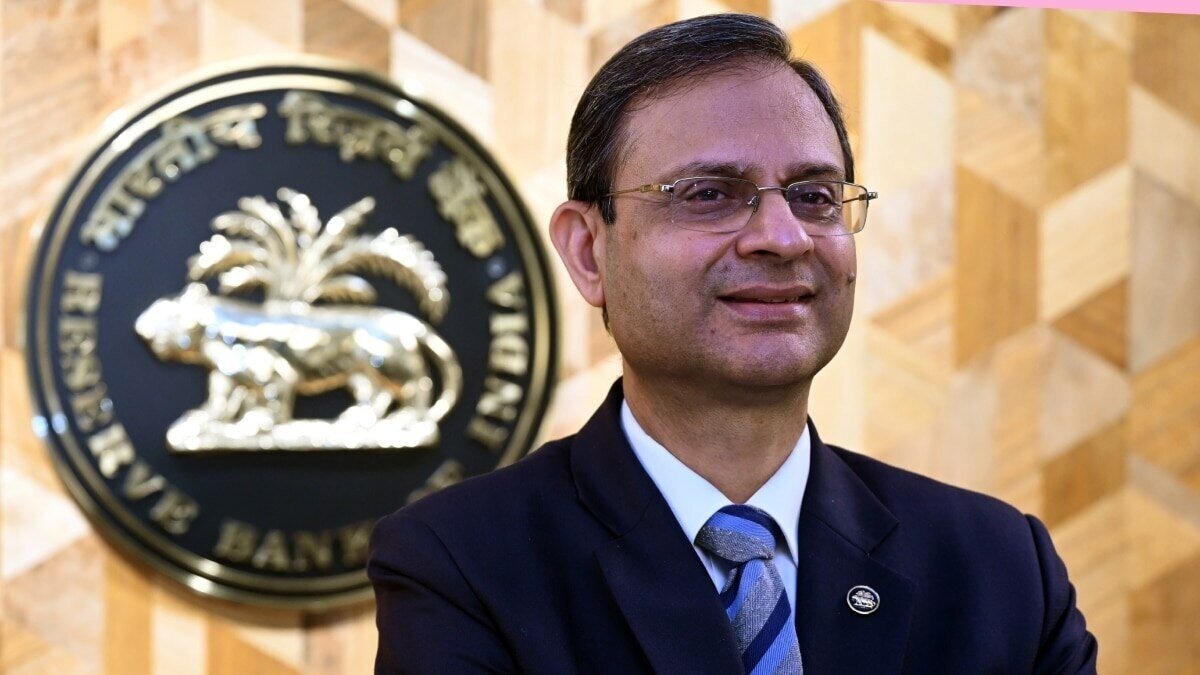

The Governor of the Reserve Bank of India, Sanjay Malhotra, addressed the central bank’s stance on the rupee, emphasizing that there is no fixed target level, even following the recent depreciation to approximately Rs 95 against the US dollar. He highlighted that the RBI’s primary focus is to manage abrupt fluctuations in the currency rather than dictate its trajectory, attributing the rupee’s movements to global influences.
Malhotra clarified that the RBI does not set specific benchmarks for the rupee and will uphold a market-driven approach for determining its value. Despite robust macroeconomic fundamentals, he acknowledged the rupee’s depreciation in the previous fiscal year compared to previous periods. The RBI’s intervention in foreign exchange markets aims to mitigate excessive volatility without aiming for any particular level or range.
Over the years, the RBI has consistently intervened to smoothen extreme currency movements rather than manipulate the currency’s direction. The central bank’s core objective is to mitigate drastic swings that could negatively impact the economy or financial sectors. Malhotra reiterated the RBI’s commitment to market-determined exchange rates and containing disruptive volatility within justified economic fundamentals.
The rupee’s devaluation coincides with heightened global risks due to the West Asia conflict, escalating crude oil prices, increased demand for the US dollar as a safe haven asset, and market volatility, which collectively exert pressure on emerging market currencies, including the rupee. The RBI observed that safe-haven inflows into the US dollar have contributed to downward pressure on major economies’ currencies.
Despite currency challenges, the RBI affirmed the stability of domestic financial conditions, citing surplus system liquidity averaging around Rs 2.3 lakh crore post the latest policy review. The central bank commits to actively managing liquidity to ensure sufficient funds for supporting economic activities. Both banks and non-banking financial institutions exhibit robust capitalization and steady asset quality, as per the RBI’s assessment.
The RBI’s statements indicate a non-defensive stance regarding any specific rupee level, opting to monitor global developments closely and intervene solely in case of excessive volatility. Given the uncertainties surrounding oil prices, global interest rates, and geopolitical tensions, the rupee is expected to remain sensitive to external factors in the foreseeable future.