
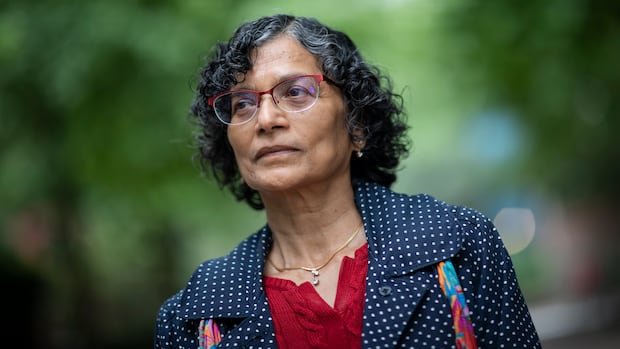

A Vancouver palliative care physician testified in B.C. Supreme Court this week that she opted to resign instead of approving patient transfers for medical assistance in dying (MAID). Dr. Jyothi Jayaraman, one of the three plaintiffs in the case, is challenging the constitutionality of publicly funded, faith-based health-care facilities that prohibit MAID on their premises.
Jayaraman resigned from her palliative care role in two Vancouver hospices in early 2023 due to the transfer of one facility’s operation to Providence Health Care, a defendant in the case. Providence Health Care does not allow MAID in its facilities due to the Catholic church’s stance against euthanasia. This decision meant that Jayaraman could no longer offer MAID to patients in their rooms but had to authorize transfers based on the institution’s religious beliefs.
She mentioned in her affidavit that she had assisted 44 patients with MAID who were subsequently transferred to different facilities for the procedure. Jayaraman expressed concerns about the physical, psychological, and spiritual distress caused by forced transfers, particularly when patients are nearing the end of life.
During cross-examination, a lawyer representing Vancouver Coastal Health highlighted the creation of adjacent spaces for MAID provision next to facilities operated by Providence. These spaces are managed by Vancouver Coastal Health, providing an alternative option for patients requiring MAID.
Jayaraman acknowledged the accommodation made for adjacent spaces but emphasized her belief that patients should have access to MAID within faith-based facilities. She expressed that even transfers to adjacent spaces could disrupt the peaceful environment that she believes patients should have during their final moments.
The case involves the Province of British Columbia, Providence Health Care, and Vancouver Coastal Health as defendants. The plaintiffs are expected to conclude their case soon, following which the defense will present their evidence.