

The Trump administration has finalized its revamp of the U.S. civil service system, granting the president authority over hiring and firing around 50,000 federal employees. This overhaul, issued by the Office of Personnel Management (OPM), fulfills a campaign promise to eliminate job protections for federal workers deemed to have undue influence on government policy.
This significant change to civil service regulations marks the most substantial alteration in over a century. Originally planned as the “Schedule F” overhaul during Trump’s first term, the initiative was delayed due to his election loss in 2020.
Under the new policy, Trump will determine which government positions lose their job protections. A federal judge will review the policy following a lawsuit filed by federal worker unions and their supporters in January. The litigation was temporarily halted as the Trump administration finalized the changes.
According to Skye Perryman of Democracy Forward, the legal challenge will resume shortly, aiming to block what is deemed an unlawful rule and hold the administration accountable through all available legal means.
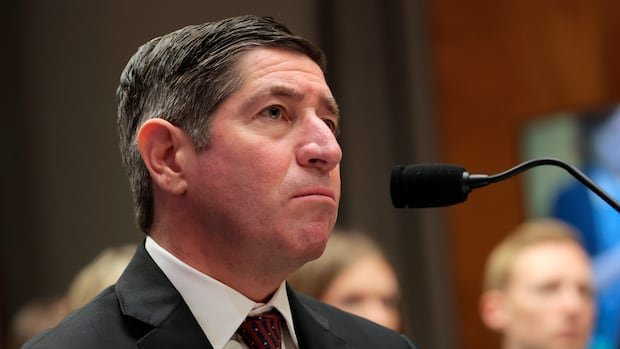
OPM Director Scott Kupor emphasized that the shift ensures the government workforce delivers efficient, responsive, and high-quality services. Despite claims of little to no cost savings, recent data shows federal salary spending has increased during Trump’s tenure compared to the previous administration.
While the final rule explicitly prohibits political patronage and discrimination, critics, including Democrats in Congress and departing employees, have contested these assertions. Instances of dismissals leading to backlogs and shortages have been reported, raising concerns over the impact on government operations.
A court challenge is expected to resume soon, with the OPM estimating a reduction of 317,000 federal jobs by 2025. This downsizing has led to the federal workforce shrinking to its lowest level in at least a decade, aligning with Trump’s efforts to streamline government operations.
Trump’s push to reduce federal employment has been met with mixed reactions, with some questioning the claimed benefits and the impact on government functionality. The administration’s focus on efficiency and cost-effectiveness has been a central theme in its efforts to reshape the federal workforce.